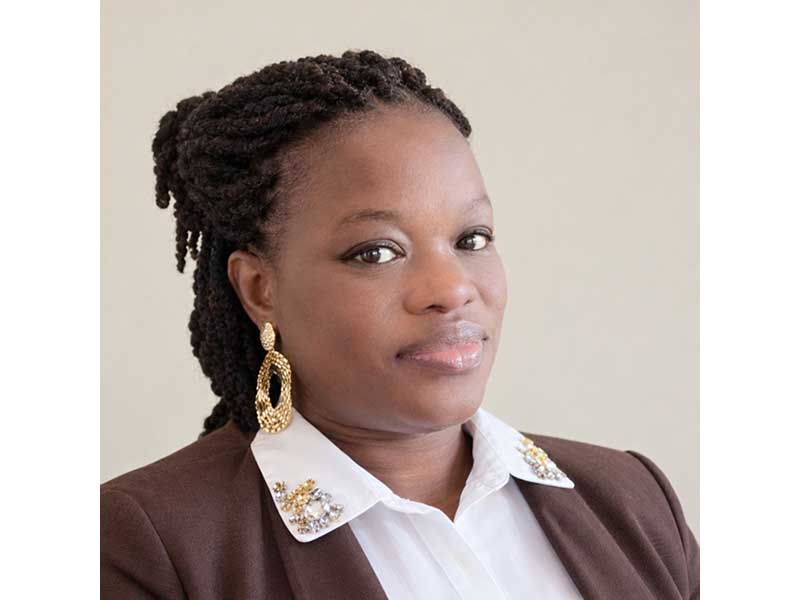
By Ing. Dr. Esther Kyere Andoh-Acquah
Mechanical engineer and lecturer specialising in HVAC&R; Head of the Department of Mechanical Engineering at Takoradi Technical University; Founder and President of WIRAC Ghana.
A connection can begin with a simple act: answering a question, sharing an opportunity, cooperating on a task or listening.
My journey in refrigeration and air-conditioning (RAC) began with an HND in Mechanical Engineering at Takoradi Polytechnic, now Takoradi Technical University. After graduating, I was employed as a technician and given a lead role. I was the only woman in the team, and some of my male colleagues were uncomfortable taking instructions from me. With limited cooperation, I often had to carry out much of the work myself.
There were supportive men, and their cooperation mattered greatly. Working with colleagues who respected my contribution reminded me that women could succeed in the profession when given a fair opportunity. It also taught me that technical knowledge alone is not enough; we need people willing to share their experience and work with us.
During that period, I observed that colleagues with degrees held supervisory positions, handling drawings, design and calculations, and overseeing practical work. I wanted to develop those skills and progress beyond my technician role. This motivated me to pursue a first degree in Mechanical Engineering.
After completing my degree, I was appointed Mechanical Services Supervisor. It was a significant achievement, but the difficulties did not disappear. Some colleagues continued to resist my leadership, and poor cooperation sometimes made it difficult to coordinate the work. I had to keep developing my competence while finding ways to manage those relationships.
The working environment presented other challenges. Some sites lacked suitable toilets and separate changing rooms for women. Night shifts and weekend duties could be difficult to combine with family responsibilities. I also encountered reluctance to employ women because of assumptions about marriage and maternity leave. These experiences made me think seriously about how women could enter the sector and remain in it.
They contributed to my decision to move into academia. I wanted to share my knowledge, serve as a role model and advocate for greater participation by women. I pursued postgraduate qualifications and a PhD to strengthen my expertise, advance professionally and contribute more effectively to technical education and discussions about women in engineering.
My academic journey was not straightforward. I had to pause my doctoral studies and complete an MPhil to meet a research qualification requirement. My PhD took six years, alongside my responsibilities as a lecturer, wife and mother of three. Today, I serve as the first female Head of the Department of Mechanical Engineering at the institution where my HND journey began.
One professional connection that has meant a great deal to me is my longstanding relationship with the Ozone Unit of Ghana’s Environmental Protection Agency. Through that relationship, I helped secure refrigeration and air-conditioning equipment and tools for our department. These resources are being used to train students. For me, this showed how a professional relationship could benefit people beyond those directly involved.
My experiences also motivated me to establish Women in Refrigeration and Air-Conditioning Ghana (WIRAC Ghana). I wanted women to have a place to seek guidance, share difficulties and learn from one another. A student should be able to meet a woman working in the profession. A technician should have someone to approach for advice. A woman facing resistance at work should know that she does not have to manage every difficulty alone.
Through WIRAC, we are building connections around technical training, mentoring and shared experience. Our members have benefited from RAC training in Takoradi, including opportunities through the Centre of Excellence and the GIZ/TTU Professional Artisans Programme. We hope to extend these opportunities and strengthen the support available to women.
During Global HVACR Women Week, I would welcome connections with women, educators and organisations willing to exchange knowledge, support mentoring and collaborate on practical training. I would also welcome conversations with employers about facilities and working arrangements that support women’s participation.
My journey has taught me that a connection can begin with a simple act: answering a question, sharing an opportunity, cooperating on a task or listening. Those acts can help someone continue when she is considering giving up. Through WIRAC, I hope to help more women receive that support and offer it to others.
Local voices. Global connections. One HVACR community.
This article was contributed by Ing. Dr. Esther Kyere Andoh-Acquah for Global HVACR Women Week 2026, taking place from 25–31 October.
It forms part of our Local Voices series, in which women share their experiences of working in HVACR and the connections that have made a difference along the way. By sharing these stories, we hope to help others find people they can learn from, exchange ideas with and support.
What connection has made a difference to you? We welcome contributions from women across HVACR, wherever you work and whatever stage of your career you have reached. Your story does not need to be long or polished—a simple experience could help someone else take their next step.
To share your story or find ways to take part, visit globalhvacrwomenweek.com.