By Edith Ramos Tinajero
Chemical Engineer | HVAC Systems Design Specialist, focusing on critical systems
Engineering through the eyes of a woman in Mexico
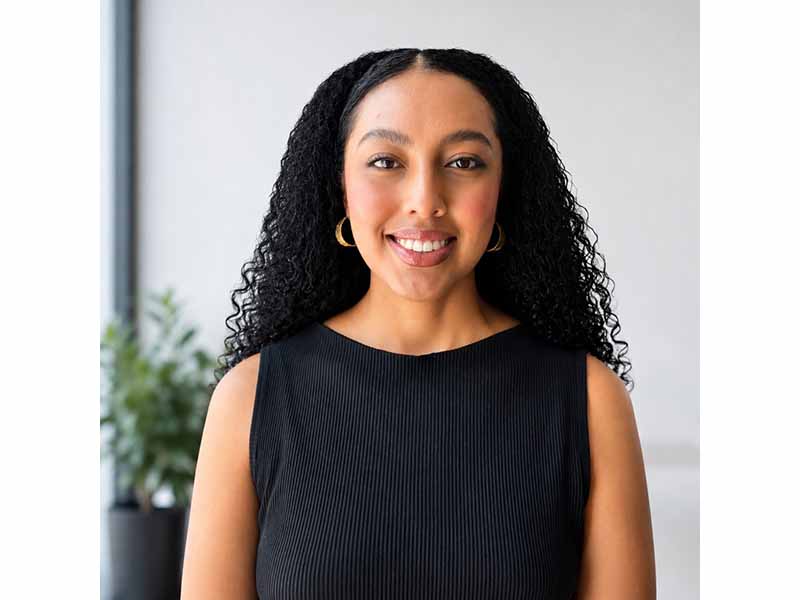
Since childhood, I have lived in a society where comments such as “That’s for boys” or “Only men do that” were always present. Perhaps that was one of the reasons that encouraged me to study engineering. I have always been passionate about mathematics, numbers and challenges. And although the journey has not been easy, I have never given up.
During university, I faced comments from lecturers that made me question whether being a woman would determine how good or bad an engineer I could become. It was no longer enough to be among those who had to work and study at the same time to get ahead; I also had to face prejudices that questioned my abilities because of my gender.
I kept asking myself: why would someone who should be there to guide me academically question my ability to pursue engineering simply because I am a woman?
Sadly, in Mexico, many prejudices about women and our role in engineering still exist. Everything I had endured at university was not the end of it; I also had to face it in my first job.
I am a chemical engineer by training, and I entered the HVAC industry through quality management rather than directly through design or systems engineering. That was where I first encountered an industry that would, over time, become a fundamental part of my professional development.
However, entering a predominately male industry as a newly qualified woman engineer presented a challenge that went beyond technical knowledge. I faced sexist comments, situations in which my studies were dismissed, and moments when I was described as “the young lady who helps” rather than “the engineer”.
The years of study, the effort I had made and the university degree behind my training seemed not to matter. It felt as though my professional preparation needed additional validation before it could be recognised.
In Mexico, the HVAC sector remains a relatively close-knit professional circle. Those of us working in this industry often cross paths or become connected through different projects, companies and job opportunities. That is why professional connections play a fundamental role in our growth.
However, I believe that opportunities to build those relationships are not always available on equal terms.
Throughout my career, I have experienced situations in which a male engineer’s opinion seems to carry more weight than a woman engineer’s, even when both have the knowledge and experience to contribute to a decision.
This leads me to ask:
How can we build professional connections on equal terms when there are still spaces where our voices are not given the same value?
Connections do more than open up job opportunities: they allow us to share knowledge, learn from other professionals and participate in important decisions. When a woman struggles to be heard, she may also face barriers to accessing those spaces.
One of the things I try to do in my professional life is help build support networks among women. In Mexico, sexism is so normalised that, at times, we reproduce its ideas ourselves. We have grown up in a society that has often taught us to compete, compare ourselves and prove that we are better than other women to deserve a place.
Women’s support networks allow us to share experiences and opportunities, develop confidence and build stronger professional relationships. When a woman opens a door for another, she helps future generations face fewer prejudices and aspire to positions of greater responsibility. It is not only about one woman going further, but about more and more of us being able to do so.
I know we still have a long and sometimes difficult road ahead. However, I firmly believe that building strong professional relationships among women can transform our experience of engineering.
Personally, I like to speak about powerful women wherever I go, recognise their work and effort, and always refer to them by the professional titles they deserve.
I believe it is important to call ourselves women engineers and acknowledge our gender with courage and pride, because we deserve to be named, we deserve to be recognised, and we deserve our knowledge to be given the same value.
We do not want to be recognised above anyone else. We want the same opportunities to participate, build connections, be heard and grow within an industry of which we are also a part.
Above all, we want to open the way for the women coming after us, so they do not have to fight for the recognition we are still seeking today.
*Originally contributed in Spanish by Edith Ramos Tinajero and translated into English for publication.
Local voices. Global connections. One HVACR community.
This article was contributed by Edith Ramos Tinajero for Global HVACR Women Week 2026, taking place from 25–31 October. It was originally written in Spanish and has been translated into English.
It forms part of our Local Voices series, in which women share their experiences of working in HVACR and the connections that have made a difference along the way. By sharing these stories, we hope to help others find people they can learn from, exchange ideas with and support.
What connection has made a difference to you? We welcome contributions from women across HVACR, wherever you work and whatever stage of your career you have reached. Your story does not need to be long or polished—a simple experience could help someone else take their next step.
To share your story or find ways to take part, visit globalhvacrwomenweek.com.