On 25 October 1892, Margaret Ingels was born in the small Kentucky town of Paris. Exactly 134 years later, on 25 October 2026, the inaugural Global HVACR Women Week will begin.
The coincidence provides a natural historical anchor for the Week, but the connection between Ingels and its purpose runs much deeper. Her life brought together technical innovation, human comfort, education, communication and a determination to widen the way for others.
Margaret Ingels was undoubtedly a pioneer. Yet she understood that the real value of going first was not the distinction it gave the individual, but the opportunities it could create for the people who followed.
A pioneer may open a trail, but a community makes it wide enough for many people to travel.
That idea lies at the heart of Global HVACR Women Week. The Week exists to broaden and strengthen the HVACR women’s community by connecting people across countries, organisations, disciplines, career stages and generations. It is therefore fitting that its inaugural year should begin with a woman who saw pioneering not simply as an achievement, but as a responsibility.
Curiosity, determination and independence
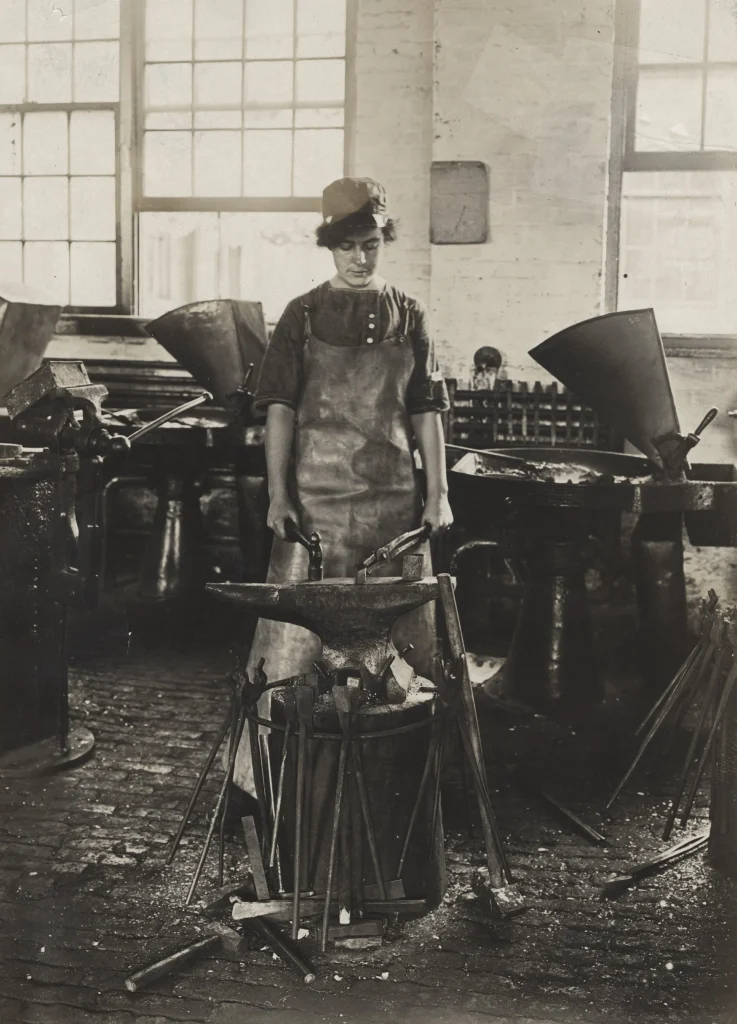
Photograph by Louis Edward Nollau. University of Kentucky Special Collections Research Center.
Ingels grew up in Paris, Kentucky, and is said to have become curious about science after noticing moisture forming on the outside of a cold glass. It was an everyday encounter with condensation—the kind of observation from which an interest in HVACR can still begin.
She entered the University of Kentucky in 1911 intending to study architecture. When she discovered that the university did not offer an architecture degree, engineering dean F. Paul Anderson suggested mechanical engineering as “the next best thing”. What might have been an obstacle became a redirection into a profession in which she would make history.
Engineering was then overwhelmingly male, but Ingels appears not to have allowed other people’s expectations to define her ambitions. In 1916, while she was still a student, the university newspaper asked her what it considered the “all-important” question: “Will you ever marry?”
Her reply revealed independence, humour and an acute awareness of the conventions around her:
“No! It will be four years before another leap year, and by then I hope to be independent.”
The answer has survived in the University of Kentucky’s historical archive. It helps us see more than the formal portrait of a pioneering engineer. Here was a young woman who understood that her future might not follow the route society expected—and was quite prepared to say so.
In 1916, Ingels became the University of Kentucky’s first female engineering graduate. She is also widely recognised as one of the first women in the United States to graduate in engineering and the first to complete a full mechanical-engineering course of its kind.
Her earliest employment was in the traffic-engineering department of the Chicago Telephone Company. In 1917, however, she joined the Carrier Engineering Corporation in Pittsburgh, becoming what Carrier describes as America’s first female air-conditioning engineer.
Air conditioning was not yet the familiar technology it is today. It was an emerging field concerned with controlling temperature, moisture, air movement and cleanliness. Ingels was entering both a profession and a branch of engineering whose boundaries were still being established.
She later returned to the University of Kentucky and, in 1920, became the first woman in the United States to receive its professional degree of Mechanical Engineer. Some later accounts describe this as a master’s degree, but the university’s own biographical record uses the historically accurate description “professional degree of Mechanical Engineer”. The distinction does not diminish the achievement: no American woman had previously received that qualification.
Investigating what comfort really means
In 1921, Ingels joined the research laboratory of the American Society of Heating and Ventilating Engineers, one of the organisations that would eventually become ASHRAE.
There, she took part in early investigations into the relationship between atmospheric conditions and human comfort. The laboratory examined how temperature, humidity and air movement acted together upon the human body—work that helped move the industry beyond the idea that comfort could be represented by dry-bulb temperature alone.
Ingels is frequently credited in modern biographies with developing the “effective temperature” scale. The contemporary technical record reveals a more collaborative story. The scale itself is principally associated with F. C. Houghten and C. P. Yaglou, while Ingels contributed experimental work to the wider research programme.
Her 1924 paper, Value of the Kata Thermometer in Effective Temperature Studies, appears in the index of early ASHVE Transactions alongside investigations by other researchers into clothing, air movement, humidity, skin temperature and physiological response.
Recognising the collaborative nature of this research does not lessen Ingels’ contribution. It makes it more relevant to the purpose of Global HVACR Women Week. Progress did not come from one person working in isolation. It emerged from a community of researchers, each adding evidence, testing instruments and improving the profession’s collective understanding.
Ingels also researched airborne dust and the instruments used to measure it. In work associated with school ventilation, she helped assess methods of determining the amount of dust in classrooms and public places. Her research was published by the US Bureau of Mines as Comparative Tests of Instruments for Determining Atmospheric Dusts.
Other work examined air infiltration through brick walls and windows. These subjects remain strikingly current. More than a century later, HVACR professionals continue to investigate the same fundamental questions: What makes an indoor environment comfortable? How do ventilation and air quality affect people? How does the building fabric influence performance? How can technical evidence be translated into healthier and more effective indoor environments?
Ingels’ work reminds us that HVACR has never been only about equipment. Its ultimate purpose is people.
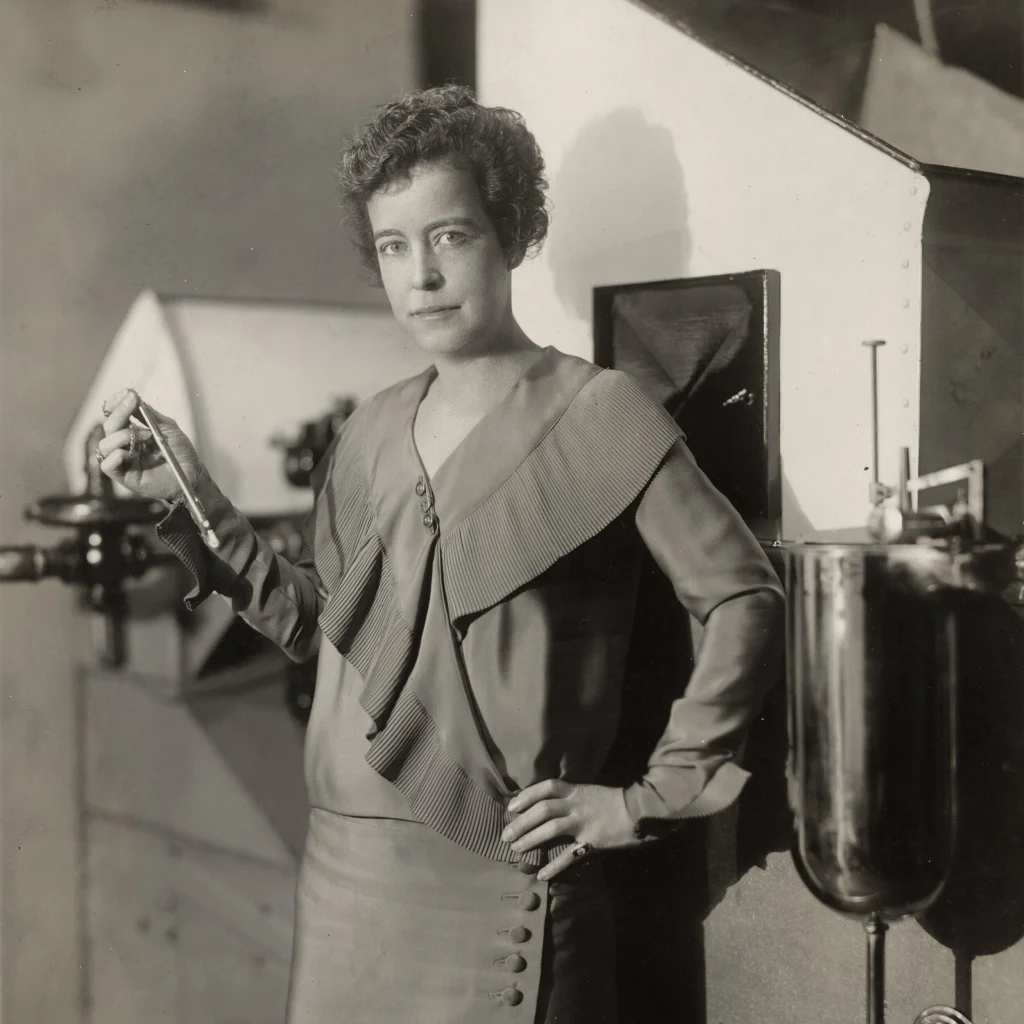
Image: Margaret Ingels Papers, University of Kentucky Special Collections Research Center.
Connecting technical knowledge with everyday life
Ingels returned to Carrier in the early 1930s as the company worked to explain the possibilities of residential air conditioning. A contemporary Carrier publication described her as its first woman air-conditioning engineer to undertake an educational programme about “Manufactured Weather” and how it could be controlled in the home.
The expression belongs to another era, but the role feels remarkably modern. Ingels was not simply helping to develop technology; she was helping people understand it.
At a time when air conditioning was unfamiliar to most householders, she translated technical ideas about temperature, humidity, filtration and air movement into everyday benefits. She connected laboratory knowledge with lived experience.
From 1932 to 1952, she reportedly delivered more than 200 talks to audiences totalling over 12,000 people. She spoke to engineering bodies, professional groups, women’s organisations and young people. Her demonstrations of refrigeration and air-conditioning principles introduced audiences to a developing technology and encouraged younger people to consider engineering careers.
She also produced more than 45 technical papers and publications and wrote Willis Haviland Carrier: Father of Air Conditioning, published in 1952.
This combination of engineer, researcher, educator, writer and public communicator made Ingels unusual. She moved between universities, laboratories, industry, professional institutions and public audiences. Knowledge did not remain within one organisation or specialist circle. She carried it from one community to another.
That movement matters. A technical sector becomes stronger not merely by accumulating knowledge, but by sharing it. A professional community grows when people make introductions, explain what they know, invite others into the conversation and help them see where they might belong.
More than a collection of firsts
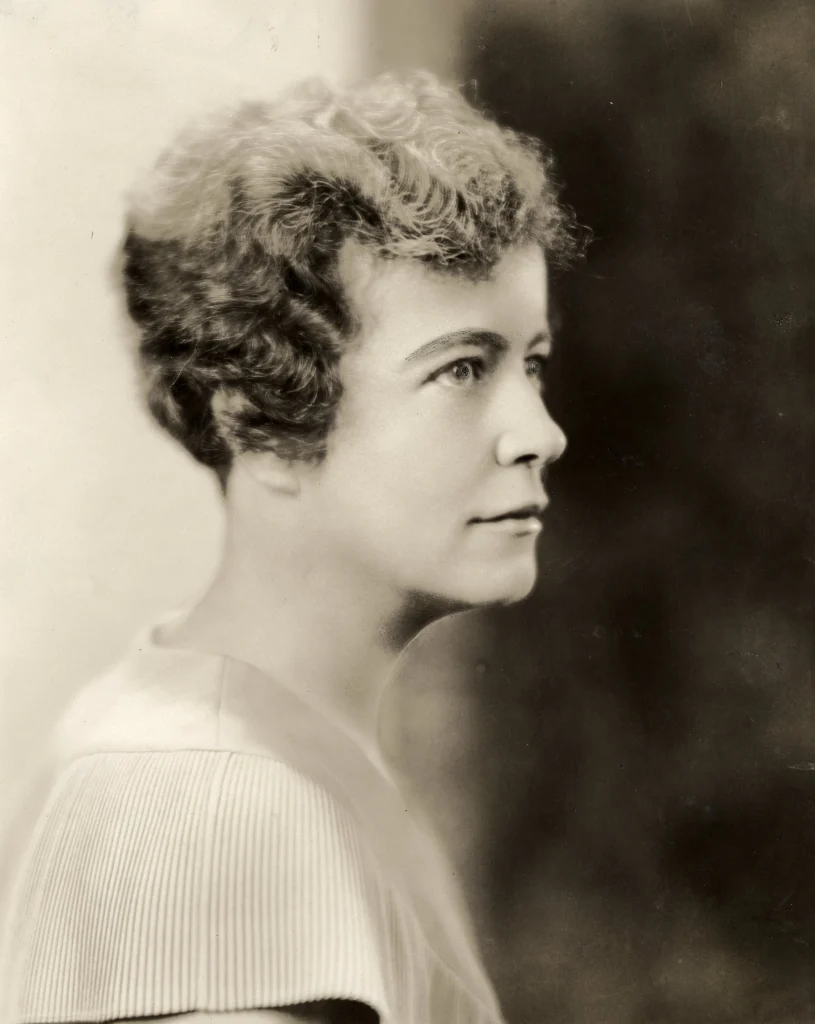
Image: Margaret Ingels Papers, University of Kentucky Special Collections Research Center.
It would be easy to present Ingels simply as a list of historic firsts: the first female engineering graduate from the University of Kentucky; the first American woman to receive the professional degree of Mechanical Engineer; Carrier’s first female engineer; and one of the earliest women to sustain a career in air-conditioning research.
Those achievements deserve recognition. They were made at a time when American women did not yet have equal voting rights and when women entering engineering were often treated as curiosities or exceptions.
Yet a list of firsts can also distance a pioneer from everyone else. It can imply that history is made only by remarkable individuals and that the rest of us are spectators.
Ingels’ own words suggest something different.
Shortly before retiring, she addressed the Western Society of Engineers in Chicago on 4 September 1952. Her speech, entitled “Petticoats and Slide Rules”, looked back at the women who had preceded her and forward to those who would follow.
She described every woman joining engineering as becoming part of a continuing “procession”. Each benefited from a “rich heritage” created by those who had already challenged convention and entered the profession.
But receiving that inheritance also created an obligation. Ingels argued that women engineers had to demonstrate that “petticoats and slide rules are compatible”. Their task, she said, was to “widen the trails” and turn them into highways for the future.
The complete passage, preserved in the University of Kentucky’s biography of Ingels, presents progress not as an individual possession but as something handed from one generation to another.
Ingels did not believe that women should simply admire those who had gone first. Each new participant had a responsibility to continue the work.
A pioneer may open a trail
This is where Ingels’ story connects most powerfully with Global HVACR Women Week.
The Week is not principally an awareness campaign, an awards programme or a retrospective commemoration. It is an international community week intended to create connections between people who might otherwise remain separated by geography, organisation, discipline, seniority or generation.
Ingels’ image of trails becoming highways provides an unusually strong metaphor for that purpose.
A pioneer may find an opening and take the first difficult steps. But one person cannot create a highway. That requires many people, working over time, connecting separate routes and ensuring that the way remains open for those who come next.
The HVACR women’s community already contains many such trails. They have been created by engineers, technicians, contractors, researchers, business owners, educators, students and advocates in countries throughout the world. Some are well established; others are only beginning. Some connect large national organisations; others begin with a small local group or a conversation between two people.
Global HVACR Women Week aims to bring those routes together.
It invites established leaders to share the paths they have travelled, while making room for emerging and first-time voices to influence where the community goes next. It encourages local groups to connect with organisations in other countries, technicians to speak with researchers, students to question experienced professionals, and people from different generations to learn from one another.
No single person, organisation or country can build this wider route alone. Community is created when people show up for one another, speak up from their own experience and lift others up through encouragement, introductions and shared opportunities.
The pioneers of the inaugural Week
Margaret Ingels was a pioneer in her time. Everyone who takes part in the inaugural Global HVACR Women Week will also be a pioneer.
They may not be the first woman to earn an engineering degree or enter an air-conditioning laboratory. Their pioneering act will be to help create an international community week that has not existed before.
Every person who organises an event, accepts an invitation, shares a local experience, asks a question, introduces two groups or reaches across a national or organisational boundary will help determine what the Week becomes.
The pioneers will not only be the prominent speakers or established leaders. They will be the technician sharing her experience for the first time; the student asking the final question; the group inviting a guest from another country; the colleague making an introduction; and the participant who listens to someone whose experience is different from their own.
Together, they will create the first paths between communities that may previously have travelled separately.
The success of the inaugural Week will therefore not be measured only by the number of activities taking place between 25 and 31 October 2026. Its more important legacy will be found in what continues afterwards: the relationships that endure, the conversations that develop, the opportunities people create for one another and the stronger community left for those who have yet to join it.
Those taking part will be building that community for themselves and for one another—but also for people they may never meet.
Why Margaret Ingels belongs at the beginning
Choosing Margaret Ingels does not suggest that the history of women in HVACR belongs to one country. On the contrary, her story provides a starting point from which communities around the world can introduce their own pioneers and their own local histories.
Her voice should open the conversation, not dominate it.
Her life began locally, in Paris, Kentucky, with curiosity about the world around her. Her work then carried her into a developing international industry. She connected academic study with industrial practice, scientific measurement with human comfort, technical expertise with public understanding, and her own pioneering career with the prospects of future women engineers.
Most importantly, she understood that progress had to extend beyond the individual.
Being first may open a trail. Sharing knowledge helps others find it. Creating connections widens it. Building community turns it into a route that many people can travel.
Margaret Ingels helped open the trail. The pioneers taking part in the inaugural Global HVACR Women Week will continue the work—broadening and strengthening the community for ourselves, for one another and for the generations still to come.
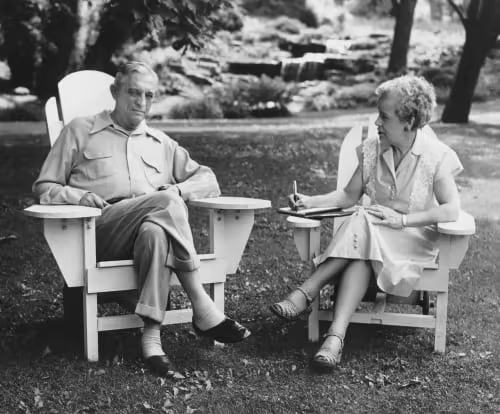
Image: Carrier.
About Global HVACR Women Week
Global HVACR Women Week takes place from 25–31 October 2026, bringing together women and allies across countries, organisations, disciplines and generations. Everyone is invited to show up, speak up and lift others up—by joining a conversation, sharing local experience or creating a new connection.
Local voices. Global connections. One HVACR community.