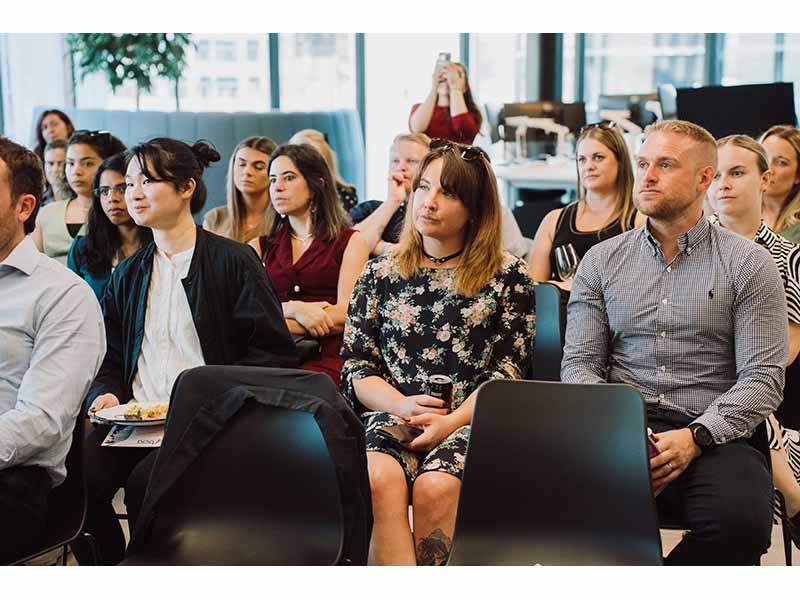
Photograph supplied by WiBSE.
Attracting more women into engineering is only one part of creating a more representative profession. Women must also be supported to remain, develop their expertise, progress into senior positions and contribute to the institutions that shape their industry.
This understanding lies at the heart of CIBSE Women in Building Services Engineering—WiBSE.
Established in 2012, the network has a clearly expressed purpose: to inspire the next generation and create the support needed for more women to join, stay and progress within building services engineering and the Chartered Institution of Building Services Engineers.
Those three words—join, stay and progress—give WiBSE’s work particular significance. They recognise that recruitment alone cannot correct gender imbalance if women subsequently encounter barriers that cause them to leave the profession or prevent their progression.
By creating collaborative spaces for discussion, skills development, shared learning and mutual support, WiBSE aims to cultivate a vibrant community that champions its members’ professional development and success.
Creating a network for change
WiBSE was established with several interconnected objectives.
It works with CIBSE to increase and retain the number of women in building services engineering, support women who return to work in the industry following career breaks, create opportunities for professional networking and provide guidance on EDI best practice in the industry.
It also encourages more women to join CIBSE and contribute to the Institution’s governance and activities.
Participation is free and is not restricted to CIBSE members. Men are welcome too, recognising that creating a more inclusive profession requires support and action across the wider industry.
WiBSE forms part of CIBSE’s broader equity, diversity and inclusion structure. Its chair represents the network within the Institution, creating a route through which women’s experiences and priorities can contribute to wider discussions and decisions. Jessica Glynn currently chairs WiBSE and represents the network on CIBSE Council.
Reaching women throughout the profession
Building services engineering encompasses a broad range of disciplines and career paths.
Its professionals design, install, commission, operate, maintain and improve the systems that make buildings safe, healthy, comfortable, productive and energy efficient. They work across heating, ventilation, air conditioning, refrigeration, electrical services, lighting, public health, controls, digital systems, sustainability and facilities management.
Women contribute throughout this community as engineers, technicians, researchers, consultants, contractors, educators, manufacturers, project managers and business leaders. Nevertheless, they remain underrepresented.
WiBSE’s open membership model recognises that women may need support before they are ready to join a professional institution. The network provides an accessible point of connection that can subsequently lead towards professional membership, registration, volunteering and leadership.
Helping women stay
Engineering initiatives often concentrate on encouraging girls and young women to enter the profession. That work is essential, but entry is not the same as retention.
Research across UK engineering has continued to indicate that women leave the profession at a higher rate than men, with the period between approximately 35 and 44 presenting a particular concern. This is often the point at which professionals are expected to move into senior technical, management or leadership positions while potentially also facing caring responsibilities, inflexible working arrangements or persistent organisational barriers.
When a woman leaves engineering after ten or fifteen years, considerable knowledge and experience leave with her. The loss affects the individual, her employer, clients, the profession and future generations who see fewer senior female role models.
WiBSE’s focus on helping women “stay” therefore addresses an important workforce and skills challenge.
In 2026, WiBSE adopted “Balancing the scales” as a focus for its work. Its examination of the gender pay gap highlighted the difference between visible progress and genuine parity. Representation may improve while inequalities in pay, opportunity, influence and progression remain.
This moves the conversation beyond what women themselves need to do. Mentoring and confidence-building can support individuals, but employers and institutions must also examine recruitment, pay, promotion, flexible working, parental leave, workplace culture and access to technical and leadership opportunities.
WiBSE has recently worked with CIBSE’s membership team to improve communication around the Institution’s support for those taking career breaks, with clearer guidance on reduced membership rates and CPD offerings. The next step is to work with the UK Engineering Council to review CPD requirements for those on career breaks.
Making real experiences visible
Sometimes the most powerful professional support begins with hearing someone say: “I experienced that too.”
In 2026, WiBSE announced Building Voices, a series of short talks intended to inspire, connect and empower women across building services engineering.
Rather than depending only on formal presentations from established industry leaders, the initiative invites people to share honest experiences and practical insights. Contributors do not need to be senior executives, recognised experts or experienced speakers. A career lesson, an obstacle overcome or an experience that might help someone else can be enough.
The talks are only 15 minutes long and are intended to be recorded, making them available to people unable to attend in person and creating a continuing library of voices from across the profession.
Building Voices also offers new speakers an opportunity to develop confidence and visibility. It recognises that professional insight exists at every career stage, not only at the top of an organisational chart.
So far, four Building Voices talks have taken place, and recordings of all are accessible on CIBSE’s Grow Your Knowledge platform. Topics have included “A day in the life” as a woman in the industry, “Finding your people”, “Non-linear career paths” and why you should volunteer.
Inspiring the next generation
WiBSE’s commitment to inspiring the next generation connects it with CIBSE’s Young Engineers Network, STEM Ambassadors and educational outreach.
Joint activities have included International Women in Engineering Day events and panel discussions addressing subjects such as inclusive design. WiBSE representatives have also supported initiatives intended to introduce building services engineering to school pupils.
This work matters because the profession itself is often poorly understood. Young people may recognise civil, mechanical or electrical engineering without knowing that building services engineers design the systems affecting the air they breathe, the temperatures they experience, the energy buildings consume and the conditions in which people live and work.
Female role models can make these careers more visible and achievable. They can also demonstrate the diversity of technical, creative, practical and leadership opportunities available throughout the built environment.
Central purpose, regional voices
WiBSE’s story is not confined to one central panel or one part of the United Kingdom.
Publicly visible activity includes networks and events in the UK North West, Ireland, Northern Ireland and the Middle East and North Africa. These communities can respond to local circumstances while remaining connected through the wider CIBSE network.
WiBSE North West, for example, has developed activities intended to help women and gender-diverse professionals feel seen, heard and supported. Its Supper Clubs have created an informal environment in which participants can build relationships and discuss their experiences.
Rachael Gilbert reflects on how those connections have developed:
“What brings everyone together? Food.
When I started the WiBSE North West Supper Clubs, the idea was to give women in building services somewhere relaxed to meet, eat, share stories and realise that other people were having many of the same experiences.
What happened next was better than I could have hoped for. We created this brilliant little community where you could walk into an industry event, spot someone you knew across the room and immediately feel that little bit more comfortable. That feeling of ‘oh good, I know someone here’ might sound small, but it can make such a difference.
Things have evolved since then. There’s now a much busier CIBSE North West events calendar, and I’ve been putting more of my energy into developing Building Voices. But the network is still there. Our WhatsApp group keeps everyone connected, and those relationships have carried on outside the Supper Clubs themselves.
For me, that’s what community building is about. You create the space for people to meet, but eventually they don’t need you to keep creating the space. They’ve found each other.
And if you’re thinking of starting something similar? Do it. Food helps.”
Rachael Gilbert, Mechanical Engineer, Troup Bywaters + Anders
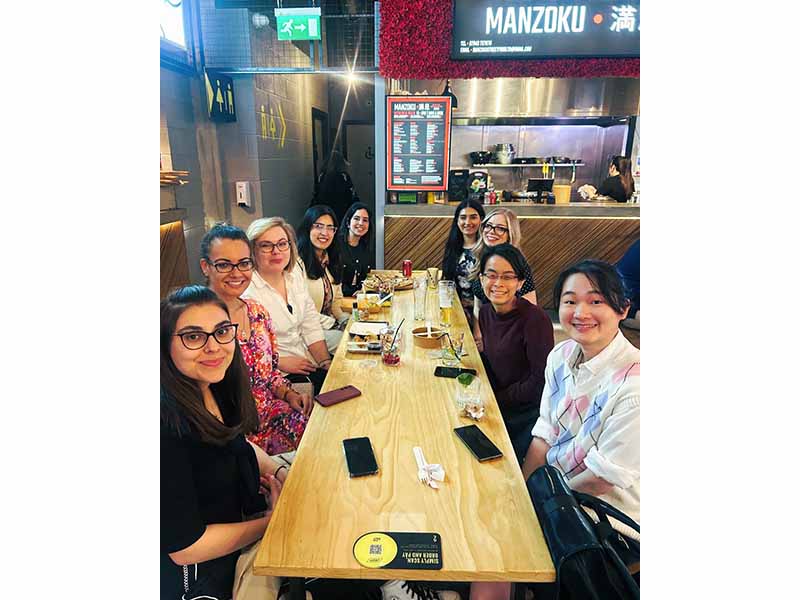
Photograph supplied by WiBSE.
WiBSE activity in Ireland has increased women’s visibility through networking and industry events, while Northern Ireland has developed its own network presence.
In March 2026, WiBSE MENA collaborated with the Emirates Green Building Council Women’s Network on an event in Dubai examining embodied carbon and women’s role in climate action and engineering innovation. Combining a technical discussion with a leadership workshop demonstrated that women’s professional development and technical contributions should not be treated as separate subjects.
Regional flexibility is one of WiBSE’s strengths. The barriers and opportunities experienced by women vary between locations. Regional leaders understand those circumstances and can develop relevant activities while sharing ideas across the wider network.
Participation in professional leadership
WiBSE’s mission includes encouraging more women to contribute to CIBSE’s governance and activities.
Professional institutions influence technical knowledge, standards, qualifications, public policy and perceptions of leadership. Women should not only be represented among members; they should also help shape the Institution’s priorities and decisions.
Participation may begin with attending an event or joining a regional committee. It can develop through technical groups, panels, conference presentations, authorship, Council membership and trustee roles.
Visibility creates a cumulative effect. When women chair panels, deliver technical presentations or hold senior institutional positions, they show others that these routes are open while bringing a wider range of experience into professional decision-making.
Building a profession in which women can thrive
WiBSE’s work is not about helping women adapt indefinitely to systems that were not designed with them in mind. Its wider purpose is to help create a profession in which women can thrive without having to overcome avoidable barriers at every stage.
The long-term test is not simply whether more women enter building services engineering. It is whether they remain, receive equitable recognition, progress according to their abilities and feel able to influence the profession.
Building services engineers face enormous responsibilities. They must help deliver safer, healthier, lower-carbon and more resilient buildings while responding to technological change and an urgent demand for skilled people.
The industry cannot meet those responsibilities while failing to attract, retain or fully utilise a large part of the available talent.
“As someone at the beginning of my career, WiBSE has shown me the value of being part of a supportive network of women within building services. It has helped me feel more confident, more visible, and more connected to others in the industry whose experiences I can learn from and be inspired by. Seeing women at different stages of their careers has been especially encouraging, as it has reinforced that there is space to grow and progress within the profession. The practical difference WiBSE has made is through creating opportunities to build connections, hear honest perspectives, and feel part of a community that actively supports and champions women in the industry.”
Skyler Ward, Building Services Engineering Degree Apprentice, Hoare Lea
“As an electrical engineer, I believe it’s important for women in engineering to have spaces where they can connect, share experiences and learn from one another. That’s what attracted me to WiBSE. Although I’ve only recently joined, I’m looking forward to building connections, contributing to the network and supporting other women as we progress in our careers.”
Sylvia Odey, Intermediate Electrical Engineer, Chapman BDSP
WiBSE’s emphasis on helping women join, stay and progress demonstrates that increasing women’s participation is not peripheral to the future of building services engineering. It is part of strengthening the profession itself.
“WiBSE was founded with the goal to make itself obsolete and no longer necessary. This is still what we are striving for—an industry where being a woman, or non-binary, is no different to being a man, in terms of representation, opportunities, treatment and experience. WiBSE will continue working to increase our membership, our reach and our impact. Working with other CIBSE EDI sub-panels will be critical as many women are also represented in these groups and therefore experience an even harder route through their career. We will also continue spreading the word of Allyship, as men are likewise critical to making the changes necessary in the industry.”
Jessica Glynn, Chair of WiBSE

By helping women build lasting and influential careers, WiBSE is working towards a future in which women are not merely welcomed into building services engineering but are visible, valued and able to shape its direction.
Find out more
Visit CIBSE’s Women in Building Services Engineering page for information about the network and how to join.
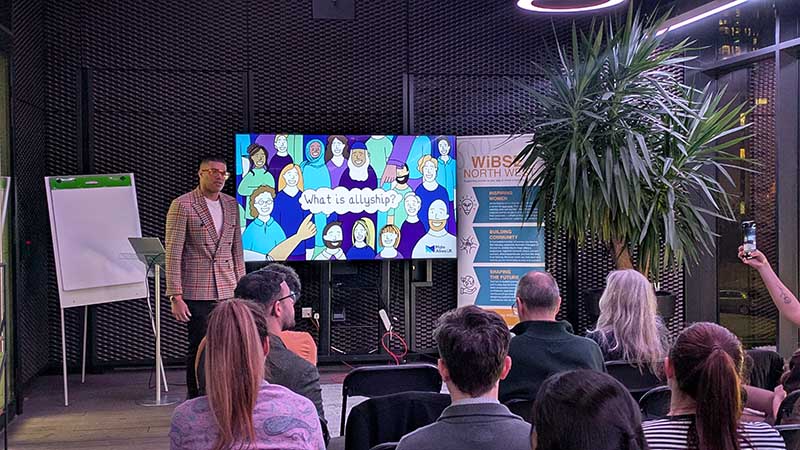
Photograph supplied by WiBSE.
This article forms part of Global HVACR Women Week’s featured organisation series, sharing the experiences of networks and organisations supporting women across heating, ventilation, air conditioning and refrigeration.
Global HVACR Women Week, 25–31 October 2026, creates opportunities to discover one another’s work, exchange experiences and build connections across borders.
Local voices. Global connections. One HVACR community.