One Society Many Local Voices
With members in more than 130 countries, ASHRAE brings together an exceptionally broad international community of engineers, researchers, designers, contractors, educators, manufacturers, students and other professionals working to advance the built environment.
Within that community, Women in ASHRAE is helping women connect across national borders while creating opportunities for participation closer to home. Its distinctive strength lies in ASHRAE’s regional and chapter network: a structure through which an international ambition can become locally relevant action.
Women in ASHRAE can therefore be understood as a connected network of Society, regional and chapter activities. Leadership events and resources developed at Society level can encourage local action, while the experiences of women in individual chapters can inform the wider international conversation.
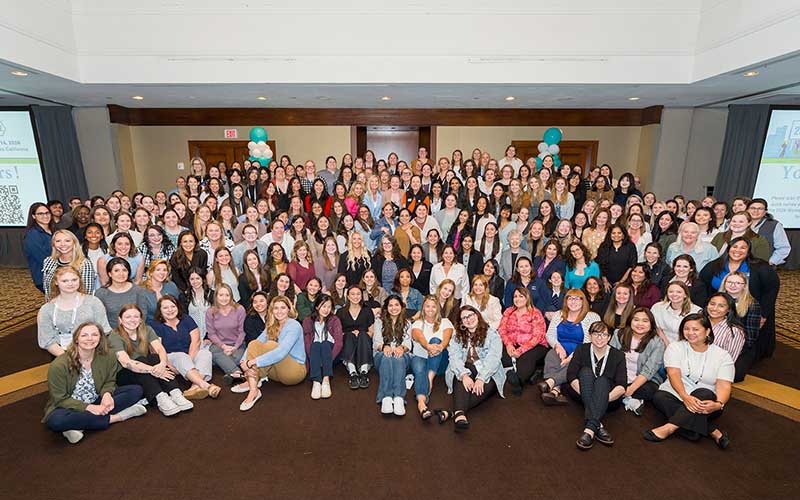
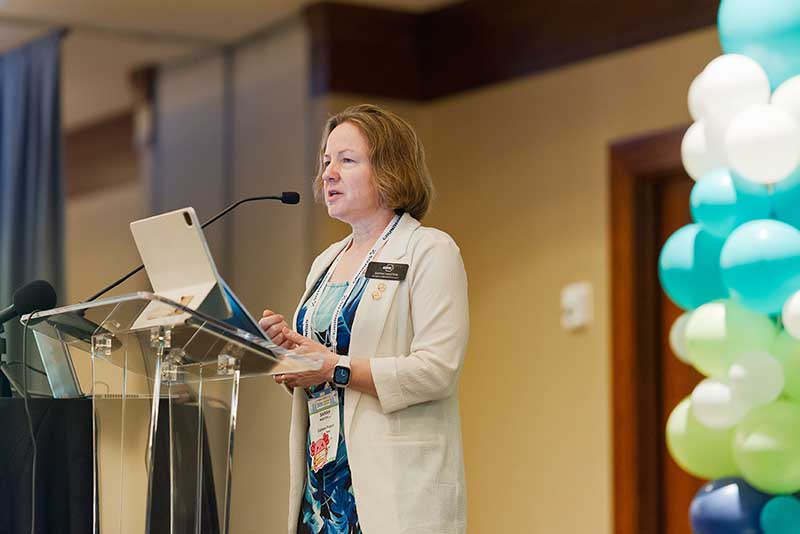
Photo credit: ASHRAE. Photographer credit to be confirmed with ASHRAE; the published image filename includes Ling Luo.
From chapter connections to wider recognition
Women in ASHRAE grew from chapter activity in Baltimore and the National Capital area, where women sought opportunities to connect outside work, support one another, find role models and develop as leaders. Early contributors included Jennifer Leach, Israa Ajam and Laura Pica Morder.
The National Capital Chapter records a joint initiative with the Baltimore Chapter in 2015. In 2016, it put forward a motion seeking formal recognition for Women in ASHRAE. At the 2018 Winter Conference in Chicago, ASHRAE’s Members Council approved Women in ASHRAE as an official chapter-level committee, giving chapters the option to appoint a Women in ASHRAE Chair.
Its purpose is to encourage the recruitment and retention of women in the built environment through professional development and leadership opportunities. That includes women working in engineering, construction, project management, property development, equipment sales and manufacturing, architecture and related fields.
This breadth matters. Women contribute to HVACR and the built environment through many different occupations, and a network that brings those experiences together can create relationships extending beyond a single employer or professional discipline.
A global framework for local action
ASHRAE’s geographical reach gives Women in ASHRAE an unusual opportunity. Women working in very different professional and cultural environments can connect through a common technical society, while regions and chapters can develop activities that respond to their own circumstances.
In one location, the immediate priority might be encouraging female engineering students to remain in the profession. Elsewhere, it may be helping experienced women become technical speakers, committee chairs or business leaders. Another chapter might concentrate on mentoring, school outreach, networking or making industry events more welcoming to women entering alone.
At Society level, the Women in ASHRAE Leadership Symposium provides a meeting point for this wider community. Its organising steering committee brings together volunteers with experience across engineering, academia, manufacturing and other parts of the industry. The 2026 symposium was led by Karine Leblanc and Nancy Kohout.
At chapter level, local committees and volunteers shape their own programmes, sometimes working alongside Diversity, Equity and Inclusion, Student Activities and Young Engineers in ASHRAE. The balance between global connection and local freedom is one of the initiative’s most valuable characteristics.
Creating places to connect
Professional relationships frequently begin with something simple: an introduction, a shared experience or the discovery that another woman has encountered the same challenge.
Women in ASHRAE activities create opportunities for those connections through conference receptions, breakfasts, chapter meetings, panel discussions and professional-development events. These gatherings can help women find mentors, collaborators and professional contacts, but their importance may extend beyond conventional networking.
For a student or young engineer attending her first major industry conference, entering a room where she can identify supportive contacts can change the experience. For a mid-career professional, meeting women who have already navigated technical leadership or senior management can help make the next step appear achievable. For an established leader, the network provides an opportunity to make her knowledge and experience available to others.
The National Capital Chapter offers examples of this variety. Its programme has included speed networking, panel discussions and joint events with Young Engineers in ASHRAE. More recent activities include Networking BINGO, yoga followed by networking, and a sustainability activity combining work on the Mount Vernon Trail with a networking brunch.
These different settings give participants several ways to make an initial connection and become involved in the chapter’s wider community.
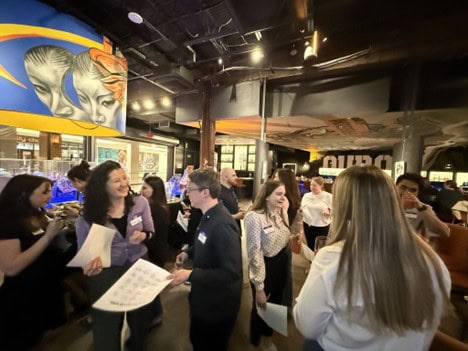
Photo credit: ASHRAE National Capital Chapter. Confirm reuse permission and any photographer credit with the chapter.
From connection to leadership
The Women in ASHRAE Leadership Symposium has developed into a significant focal point for the network.
The inaugural symposium took place in Chicago on 26–27 September 2024. Chaired by Nancy Kohout, it provided a platform for women to learn from established leaders, strengthen professional connections and explore how to develop their careers in a predominately male industry. The event sold out.
Its programme addressed mentoring, allyship, emotional intelligence, networking and leadership, with keynote contributions from Erin McConahey and Ginger Scoggins. It also introduced the Young Women in ASHRAE EmpowHERment Award, creating a presentation opportunity for younger women in the industry.
Explaining the need for the symposium, Kohout spoke about helping women:
“navigate an industry where we are still, all too often, the only woman in the room”.
Following the first event, the symposium returned to Los Angeles in April 2026 under the theme “Empower, Elevate, Lead. Belong!” ASHRAE reported 280 participants.
The programme combined leadership development with technical subject matter. Sessions addressed professional confidence and communication alongside artificial intelligence, decarbonisation, resilient building systems and ASHRAE codes and standards. Participants ranged from students and early-career professionals to experienced industry leaders.
Sarah E. Maston, then ASHRAE President-Elect, opened the programme. Keynote speakers included Dr Gail Brager, Amy Marks and Dr Sara Safari. Breakfast roundtables gave participants opportunities to discuss professional challenges in smaller groups.
Kohout described the 2026 symposium as:
“one of the most inclusive experiences I’ve had with ASHRAE.”
Strengthening women’s technical voices
Women’s advancement cannot be measured only by attendance at networking events. It must also be visible in the technical work that shapes the future of the industry.
Women in ASHRAE has the potential to help women move from attending events to contributing papers, delivering presentations, joining technical committees, participating in standards development and assuming positions of professional authority.
The technical content of the Leadership Symposium reflects that wider ambition. Discussions of artificial intelligence, decarbonisation, resilience and standards place women at the centre of subjects that will determine how buildings are designed, operated and regulated.
Calls for symposium presentations and opportunities such as the EmpowHERment Award give women platforms to share their knowledge. Chapter involvement can also help members learn about the wider Society and identify where their expertise could contribute.
Supporting women to become recognised technical authorities is valuable both to individual careers and to the profession. It expands the pool of knowledge available to ASHRAE, provides more visible examples for younger women and allows decisions affecting the built environment to benefit from a broader range of experience.
Supporting the next generation
Students and early-career professionals are essential to the long-term future of both ASHRAE and the wider HVACR sector.
Women entering engineering and related professions may encounter questions about belonging before their careers have properly begun. Visible role models, contact with practising professionals and access to supportive peers can help prevent uncertainty from becoming departure from the sector.
Student grants help make participation in the Leadership Symposium more accessible. For the 2026 event, the grant provided $500 in support: $200 towards student registration and up to $300 in travel reimbursement. It was open to eligible full-time undergraduate and graduate students, without requiring ASHRAE membership.
Access to an international event offers more than technical knowledge. It exposes students to career possibilities, professional networks and women already succeeding in roles they may not previously have considered.
Connections with Young Engineers in ASHRAE add another route into professional development. The 2026 symposium included a session on negotiation strategies for women in STEM, while the wider programme also considered career changes, relocation and encouraging the next generation into the trades.
Local action in the United Arab Emirates
The ASHRAE Falcon Chapter presentation supplied for this feature offers a closer view of how these ambitions can be translated into local activity.
Presented by Remy Moussa, whose chapter roles include Diversity, Equity and Inclusion and Young Engineers in ASHRAE, it brings together university outreach, technical education, women’s leadership and opportunities to build professional relationships.
The activities introduce students to HVAC fundamentals, sustainable building systems and career pathways. Other sessions explore energy efficiency, heat pumps, standards and future industry trends, connecting technical learning with contact with practising professionals.
A session described in the presentation as Women Leading Future Engineering drew more than 110 attendees and addressed leadership, mentorship and career growth. The presentation includes photographs of Sarah E. Maston taking part in the chapter’s activities.
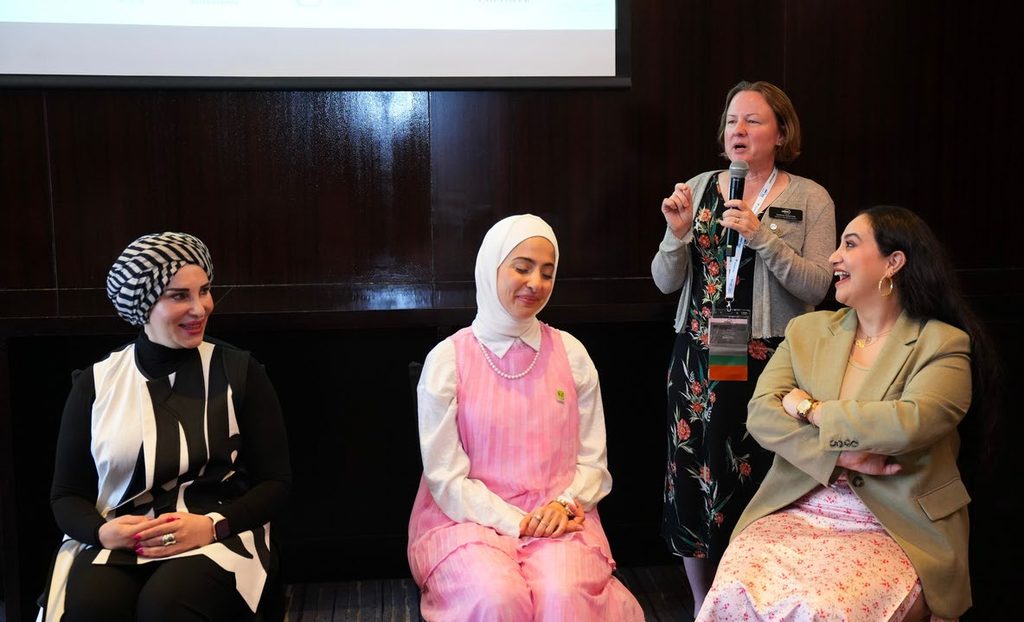
Credit: Photograph supplied in the ASHRAE Falcon Chapter DEI and YEA presentation. Photographer not identified.
The chapter also highlights women in engineering panels, opportunities for informal connection, and the inauguration of an ASHRAE student branch at Heriot-Watt University Dubai.
These activities show the value of combining technical learning with personal contact. Students can hear about engineering careers while meeting women already working in them, and young professionals can build relationships with more experienced members of the industry.
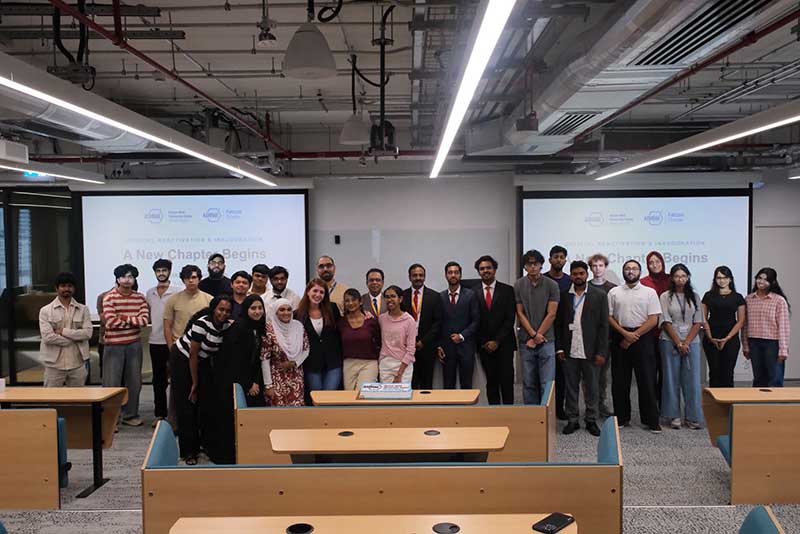
Credit: Photograph supplied in the ASHRAE Falcon Chapter DEI and YEA presentation. Photographer not identified.
Different regions different realities
An international network must recognise that women’s experiences are not uniform. Access to engineering education, technical training and professional employment varies between countries. So do workplace expectations, the visibility of female leaders and the practical ability to attend conferences or participate in professional societies.
ASHRAE’s chapter structure creates a mechanism for responding to those differences. Local leaders understand the barriers within their communities and can shape activities accordingly, while connection with a global Society allows ideas to travel between regions.
In Nigeria, the chapter’s Women in ASHRAE committee identifies professional growth, mentoring, technical skills and reducing workplace isolation among its priorities for the 2026–27 Society year. Its published plans include leadership sessions, informal networking and technical visits. The current committee page names Adeola Aduragbemi Adeleke as chair.
A successful programme developed by one chapter might provide a model for another. A regional speaker could reach a wider international audience. A chapter beginning its activities could learn from a more established group without having to build every element from the beginning.
Looking ahead
The next Women in ASHRAE Leadership Symposium is scheduled for 12–13 April 2027 at the Hyatt Regency Baltimore Inner Harbor. Its theme, Inclusion, Leadership and Action, continues the emphasis on connecting professional development with participation in the future of the built environment.
For individual members, the starting point can be a conversation with their local chapter about Women in ASHRAE activities or ways to contribute. Chapters can support participation through their local programmes, while employers and industry partners can help by supporting attendance, student opportunities and professional development.
The growth of a network can be seen in attendance figures, but its deeper value lies in what happens afterwards: a mentoring relationship, a first technical presentation, a committee role, or the confidence to take the next career step. These are meaningful measures of progress as the initiative develops.
Women in ASHRAE’s opportunity extends from student participation to sustained careers, from chapter involvement to regional leadership, and from professional connection to recognised technical authority.
Its story is one of global reach made meaningful through local action. Across conferences, regions and chapters, women can find one another, develop their expertise and become more visible contributors to the future of the built environment.
Find out more about ASHRAE and its chapters at https://www.ashrae.org and the 2027 Women in ASHRAE Leadership Symposium at https://www.ashrae.org/conferences/topical-conferences/2027-women-in-ashrae-leadership-symposium.
This article is part of the Global HVACR Women Week featured organisation series, sharing the experiences of groups supporting women across the international HVACR community.