Local Voices | Speak Up, Write Now
What would make a young person choose a career in heating, ventilation, air conditioning and refrigeration? During Global HVACR Women Week, five women in Portugal offered answers that ranged from opening up workplaces to students to making it easier for experienced women to keep progressing after becoming mothers. They also looked at the work itself and the skills Portugal will need as it modernises its buildings and cuts energy use.
AIPOR – Associação dos Instaladores de Portugal conducted and published the five interviews, one a day from 26 to 30 October 2026, and shared each interview on LinkedIn. This Local Voices feature draws on AIPOR’s original interviews, which are linked below. Quotations have been translated from Portuguese.
Read AIPOR’s announcement for Global HVACR Women Week
Odete de Almeida
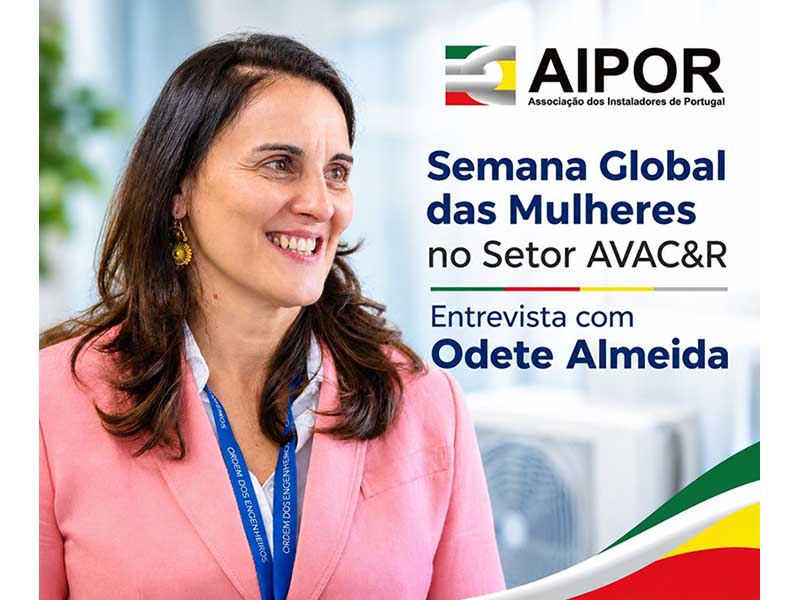
“The future is built by people from different generations,” says Odete de Almeida, a mechanical engineer who coordinates the HVAC specialisation committee of Portugal’s Ordem dos Engenheiros. In her interview, she describes what happens when experienced professionals and younger colleagues work together. They bring different knowledge to decisions that affect how well buildings perform and how much energy they use.
For Odete, that exchange of knowledge has a practical purpose. Giving younger colleagues a say brings fresh thinking to decisions about which systems to specify. Experienced colleagues can share what they have learnt from seeing installations through commissioning and maintenance. Both sets of knowledge matter when the aim is a building that uses less energy and has healthier indoor air.
Odete also asks employers to make flexibility practical so that women can keep developing their careers after becoming mothers. It is one way to keep experienced people in the sector and give them the chance to pass on what they know.
Her advice to young women is to explore technical jobs for themselves, including installation and maintenance, and give their own interests more weight than other people’s expectations. She encourages experienced women to keep learning as the technology changes and to share what they know with the people coming through.
Read Odete’s interview with AIPOR in Portuguese
Cláudia Casaca

Cláudia Casaca teaches mechanical engineering at the Instituto Superior de Engenharia de Lisboa (ISEL) and formerly chaired EFRIARC, Portugal’s association of industrial refrigeration and air conditioning engineers. She asks what happens after a young woman sees someone like herself in the profession. She points to practical experience with employers, mentoring by engineers and by installation and maintenance technicians, and a clear path to promotion.
At ISEL, Cláudia has taken part in initiatives to encourage women into science and technology, drawing on her own experience in engineering and higher education. She would like students to meet professionals through site visits and placements. Once in work, she says, women should be able to see how hiring and promotion decisions are made, receive equal pay for work of equal value and have access to further training.
Cláudia sees a similar challenge in Portugal’s energy transition. Heat pumps, refrigerants with a lower climate impact and better controls can improve buildings when the people designing, installing and looking after those systems have the right training. She wants clients to look beyond the purchase price and consider how much energy an installation will use and what it will cost to run and maintain over its lifetime.
Read Cláudia’s interview with AIPOR in Portuguese
Isabel Sarmento

Think of the cooling that keeps vaccines safe or allows a data centre to run. For Isabel Sarmento, a mechanical engineer specialising in HVAC and refrigeration, familiar examples like these can help people see why the work matters and picture themselves doing it.
She also sees women contributing in places the public rarely notices, including energy certification, research and regulation. In her experience in Portugal, women engineers have gained recognition through professional associations, while women are still rarely seen in hands-on technical roles.
Isabel has seen more young women drawn to engineering over the years. She worries that technical and vocational courses in Portugal still struggle to attract young people of either gender. She wants schools and employers to work more closely so students can see where those courses lead and meet women already doing the work.
For people already in HVACR, Isabel’s advice is to keep their technical knowledge up to date and get involved in professional associations or technical conferences. They are places to meet people beyond your own workplace, see how others are solving problems and bring that knowledge back to your work.
Read Isabel’s interview with AIPOR in Portuguese
Ana Amaro Fernandes
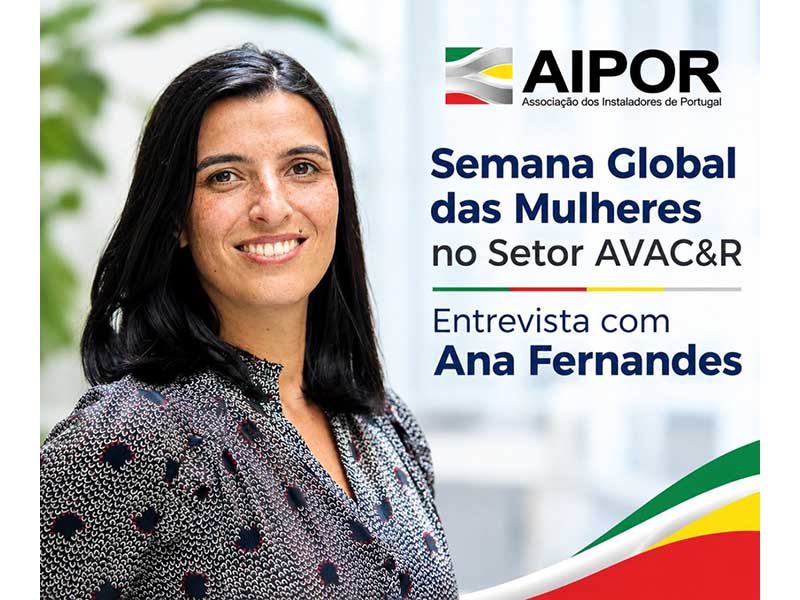
Ana Amaro Fernandes, vice-president of EFRIARC, wants careers advice to reflect the work as it is today. A student who pictures HVACR only as heavy work on building sites may never hear about a career in building automation, sustainability or analysing how buildings use energy. Ana also wants young people to see what they could achieve in hands-on roles.
Ana points to women who already help write technical standards and project specifications, manage facilities and lead professional bodies. She sees a place for people changing careers, too. In her view, a team that brings together different disciplines and experiences is better placed to find solutions that work across a whole building.
Her proposals start with careers guidance in schools and continue with mentoring, clear routes to progression, fair pay and working arrangements that people can combine with family life. For Ana, the reason to pursue a career in buildings comes down to the people who use them. She describes the work as “protecting people’s health”. It also helps cut emissions and keeps the spaces people use comfortable.
Read Ana’s interview with AIPOR in Portuguese
Celeste Campinho

Celeste Campinho, president of AIPOR, puts the challenge directly to employers. Company visits, placements and hands-on experience give young people a chance to find out what the work involves. Once they join, she argues, employers can build on that first opportunity by recruiting for skills, investing in training and giving people a chance to take on responsibility.
Celeste describes her own job as listening to installation companies, understanding the problems they face and keeping up with changes in technology and legislation. She sees a role for trade associations in helping companies develop their staff and in making the contribution installers make to building renovation and energy performance more visible.
She wants to see women in leadership treated as “something entirely natural”, with people given responsibility on the strength of their experience, judgement and results. Her advice to a young woman weighing up her options is to get to know the sector, develop her skills and trust her own abilities when deciding what work she wants to do.
Read Celeste’s interview with AIPOR in Portuguese
Thank you to AIPOR – Associação dos Instaladores de Portugal for conducting, publishing and sharing the original series, and to Odete, Cláudia, Isabel, Ana and Celeste for sharing their perspectives with the HVACR community.
What helped you find your way into HVACR? If there’s a moment, a person or an opportunity that made a difference to you, we’d love to hear about it. You’re welcome to write in your own language.
Share your story with Global HVACR Women Week :info@worldrefrigerationday.org