A decade ago, when Women of AIRAH (WOA) was established, the new group had an ambitious purpose: to develop a strategy for supporting women and increasing their participation not only within AIRAH, but across Australia’s entire heating, ventilation, air-conditioning and refrigeration industry.
For those who aren’t familiar with the organisation, the Australian Institute of Airconditioning, Refrigeration and Heating (AIRAH) represents professionals and practitioners working in the heating, ventilation, air conditioning, and refrigeration (HVAC&R) and building services industries.
AIRAH became an incorporated national body in 1920 – but it took over 90 years before a woman occupied the top position in the boardroom.
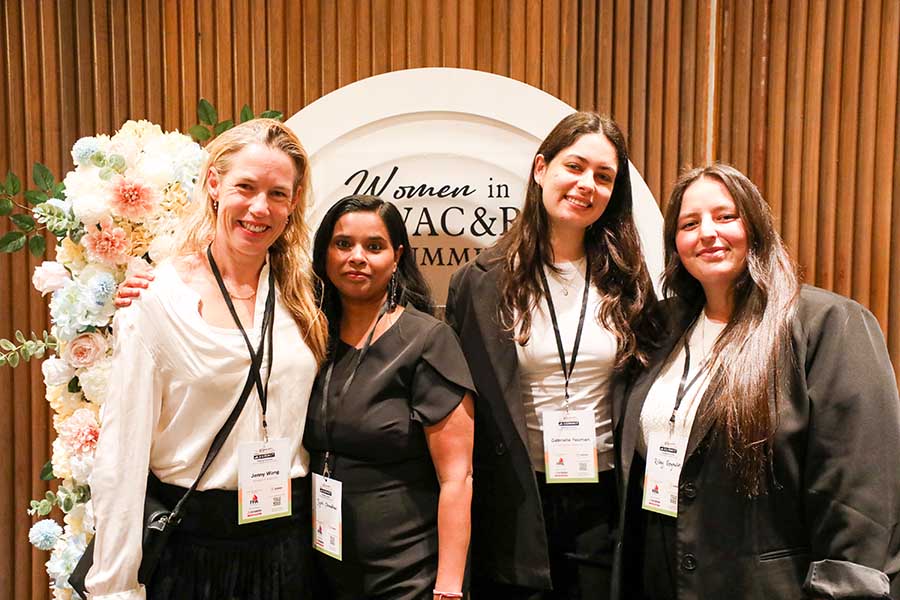
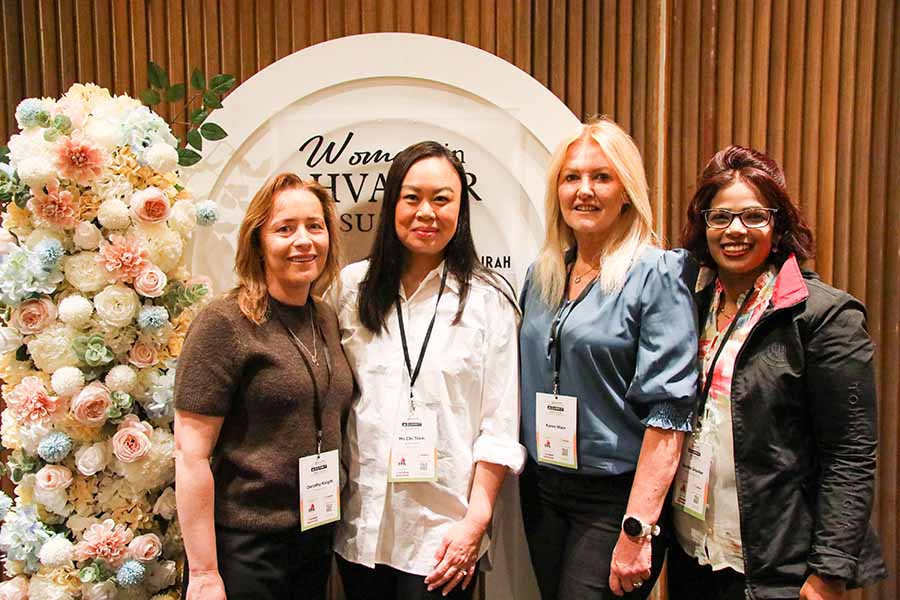
Image supplied by AIRAH.
“The establishment of WOA in 2016 coincided with Ania Hampton, M.AIRAH, becoming AIRAH’s first female President,” explains Nyasha Chiraga, Affil.AIRAH, Chair of the Women of AIRAH STG and Solutions Engineer at Fantech.
Hampton was the 53rd President of the organisation’s Board; since then, more women have taken on this role, including the current President, Mikaila Ganado, F.AIRAH, a Sydney-based mechanical engineer. The current CEO, Sami Zheng, Affil.AIRAH, is also female, as is the current Editor of the organisation’s two technical publications.
While data shows women in technical, leadership and operational roles in HVAC&R are still a minority, the visibility of women across engineering and trades has improved dramatically.
Establishing a national strategy
Women of AIRAH was formed in late 2016 and subsequently ratified by AIRAH’s Board. The group’s inaugural chair, Ura Sarfejoo, M.AIRAH, described its purpose as improving diversity and women’s representation within the industry.
Other founding members included Ganado; Victoria Totten (Hallett), AM.AIRAH; Nithiya Mohan; Jessica Holz; Jenny Smith, Affil.AIRAH, Susan Tohu, Stud.AIRAH; Camilla O’Leary, Affil.AIRAH; Cara Ryan, Affil.AIRAH, Peta Blight, M.AIRAH and Ying Han. Between them, the women represented divisions from every state and territory except Tasmania.
From the beginning, the initiative was intended to help women feel included while encouraging more women to become involved in engineering and HVAC&R.
The wider organisation also recognised that women needed somewhere to raise concerns, connect with one another and influence the profession’s approach to recruitment, retention and progression.
“The Institute understands that women are underrepresented in HVAC&R, and we believe that the creation of the Women of AIRAH group is an important step forward if this is to change,” then CEO Tony Gleeson, L.AIRAH, said in an article for the Institute’s official journal, Ecolibrium.
“Women of AIRAH will not only provide women in the industry with a forum to voice issues of concern but will also work to make HVAC&R an attractive prospect for those looking to take the next step in their career.”
Over nearly a decade, WOA has grown from a newly formed special technical group into a national network with committee representation, divisional diversity champions, state-based activities and an annual Women in HVAC&R Summit.
“Its development demonstrates how a professional association can move beyond expressing support for diversity and establish structures, targets and activities intended to produce measurable change,” explains AIRAH CEO, Sami Zheng, Affil.AIRAH.
Women of AIRAH was established as a Special Technical Group, giving it a formal place within AIRAH’s structure. It acts as a national steering committee developing and driving initiatives intended to improve women’s entry into the industry, their continuing engagement and their long-term retention.
A target designed to make the group unnecessary
WOA has adopted an unusual and thought-provoking long-term ambition: to make itself redundant by achieving critical mass for women’s representation within HVAC&R.
The group identifies 30% as the point at which women would no longer be present only as isolated individuals or a small minority. The published aims include increasing female membership of AIRAH to 30% and female participation on AIRAH committees at every level to the same proportion.
The target provides a benchmark against which progress can be assessed, says Chiraga.
Alongside numerical representation, WOA’s work addresses women’s influence, professional visibility, access to technical responsibilities and experience of workplace culture.
Diversity champions extending the work
The premise that diversity is strength has been embedded across the Institute.
Since 2019, AIRAH’s divisions and Special Technical Groups have been invited to nominate diversity champions. The STGs span a wide range of topic areas including commissioning, commercial kitchens, indoor air quality, big data and analytics, electrification of the built environment, refrigerants, building physics and healthcare and controlled environments.
The champions from these STGs are intended to encourage women’s participation, identify female speakers, promote women’s stories and achievements, support state-based Women of AIRAH events and ensure that topics such as unconscious bias, negotiation and leadership are incorporated into professional activities.
“The model helps distribute responsibility. Diversity is not left solely to the national Women of AIRAH committee; it becomes something that other technical groups and geographical divisions are asked to consider in their own programs,” explains Zheng.
Australia’s geography makes this distributed approach particularly valuable. Women need opportunities to connect in their own states and territories rather than relying exclusively on national events in one city.
There are also women contributing across many facets of the sector including consulting engineering, building operations, refrigeration, air conditioning, controls, sustainability, sales, education, manufacturing and senior leadership.
“Representing that complete range is essential if the network is to reflect the whole industry,” says Chiraga.
Supporting entry, engagement and retention
WOA’s aims extend across the complete career journey and include:
- Attracting female graduates and apprentices;
- Providing networking and support at every career stage;
- Encouraging employers to improve recruitment, career development and workplace culture;
- Helping women feel part of the HVAC&R community;
- Improving retention; and
- Making female role models and their achievements more visible.
“This breadth is important. Attracting women into the industry achieves little if workplace conditions subsequently cause them to leave,” Zheng observes.
“Similarly, increasing the number of female graduates will not resolve underrepresentation in refrigeration and air-conditioning trades unless practical pathways are also developed for apprentices and technicians.”
Developing confidence, careers and leadership
WOA activities include organised networking sessions, seminars and career-development activities through AIRAH’s national and divisional structures.
Career development initiatives have brought industry leaders together to discuss professional journeys and leadership. Other activities have considered interpersonal skills, unconscious bias, negotiation, communication and the experience of building a career in a predominantly male industry.
Zheng stresses that these subjects should not be mistaken for an attempt to “fix” women.
“Employers and industry structures must address the barriers they create. However, professional networks can equip women with useful knowledge, relationships and confidence while also challenging organisations to change.”
The group’s published objectives also span matters including best-practice guidance, training and recommendations around relevant Australian Standards.
A national summit takes shape
A major development occurred in October 2025, when AIRAH held its inaugural Women in HVAC&R Summit at Sydney’s Ivy Ballroom.
Around 130 attendees participated in the one-day program, which explored leadership, career progression, mentoring, workplace culture, communication and the use of personal stories to create visibility and influence change.
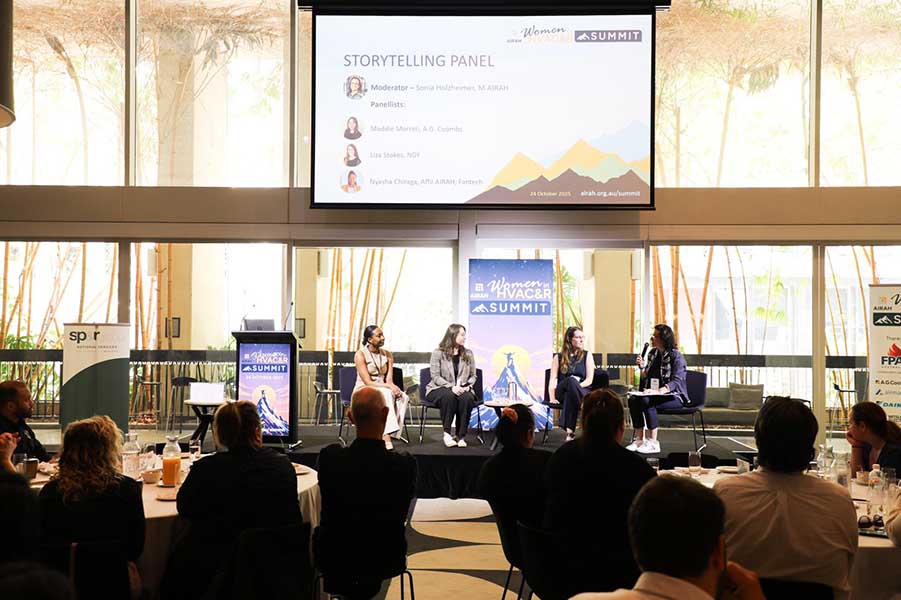
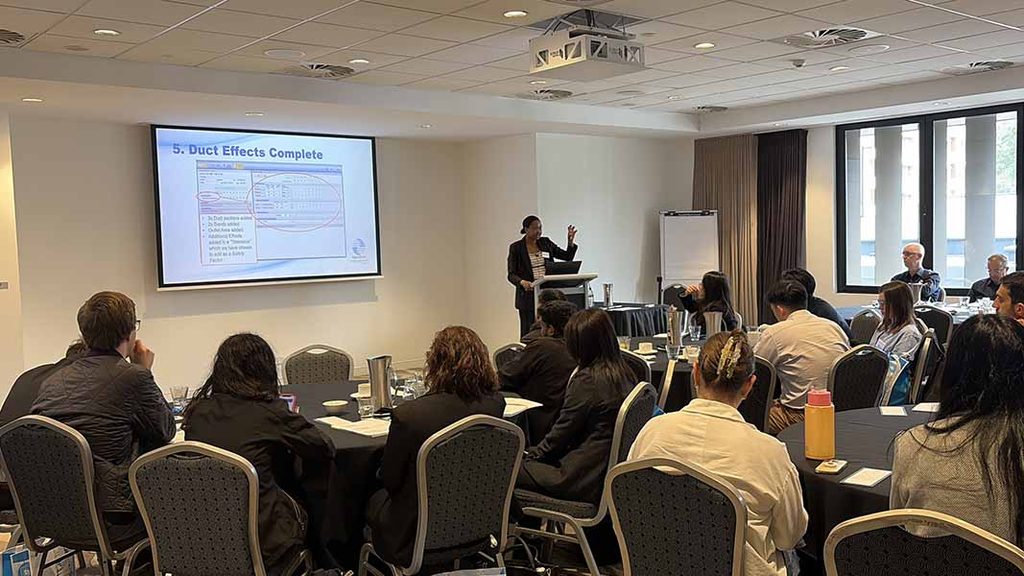
Image supplied by AIRAH.
Speakers included Alison Scotland, Pam Rogers, M.AIRAH, Elissa Henderson, Anita Kingdom and Linda Jordinson. A closing panel brought together Sonia Holzheimer, M.AIRAH, Liza Stokes, Nyasha Chiraga and Madeleine Moratti, Affil.AIRAH to consider how storytelling can educate, empower and change attitudes.
The first summit exceeded expectations, AIRAH says, generating meaningful connections and renewed energy for the work ahead.
The summit also demonstrated the importance of industry support. Partners and sponsors included the Fire Protection Association of Australia, Mitsubishi Heavy Industries Air-Conditioners Australia, Daikin, Airmaster, SP&R Group, A.G. Coombs, Reliable Controls, Fantech and Mitsubishi Electric.
Connecting with a global audience
For its second Women in HVAC&R Summit, scheduled for Melbourne on 27 October 2026, AIRAH chose the theme “Ripples: small waves, big impact”. The programme was designed to explore how small changes and greater inclusion can support innovation, growth and broader transformation in the built environment.
The summit was included in Global HVACR Women Week, held from 25 to 31 October 2026, connecting the Australian conversation with women’s networks elsewhere and providing an opportunity to exchange ideas and experiences across borders.
As Women of AIRAH looks towards its second decade, Chiraga is focused on what comes next.
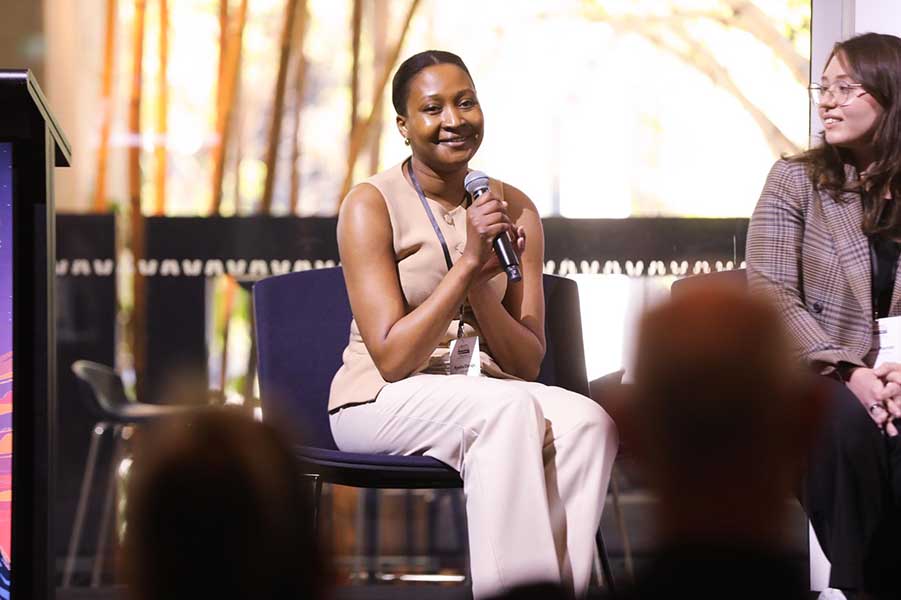
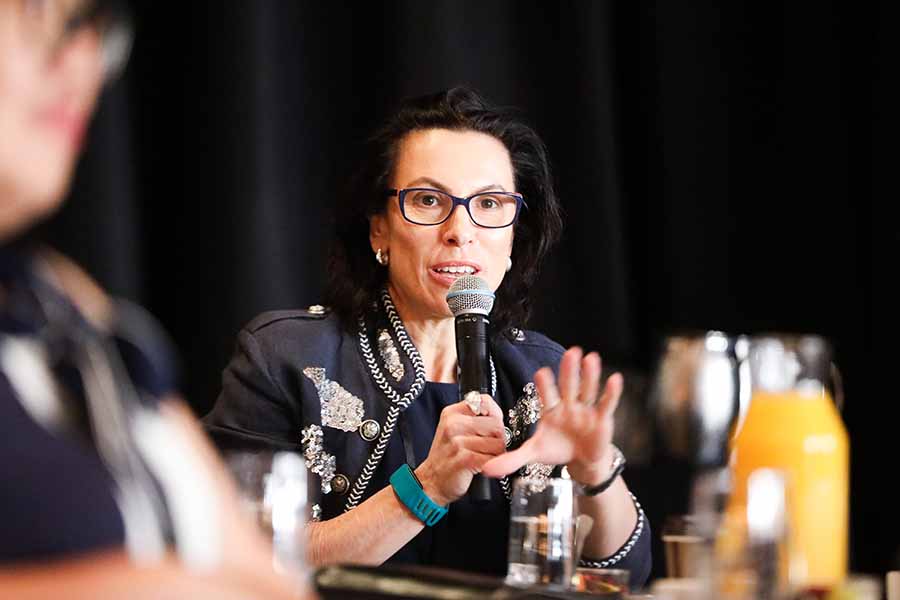
Image supplied by AIRAH.
“As Women of AIRAH enters its second decade, our priority is to turn the foundations we have built into lasting change by translating awareness into action, strengthening accountability and creating meaningful opportunities for women to participate, progress and lead across HVAC&R,” Chiraga says.
“This is a shared responsibility, requiring commitment from the entire industry. Our ultimate goal is an industry where women can thrive, contribute and lead without barriers, and where inclusion is embedded in everything we do.
“Together we can build a stronger, more diverse future for HVAC&R in Australia and beyond.”
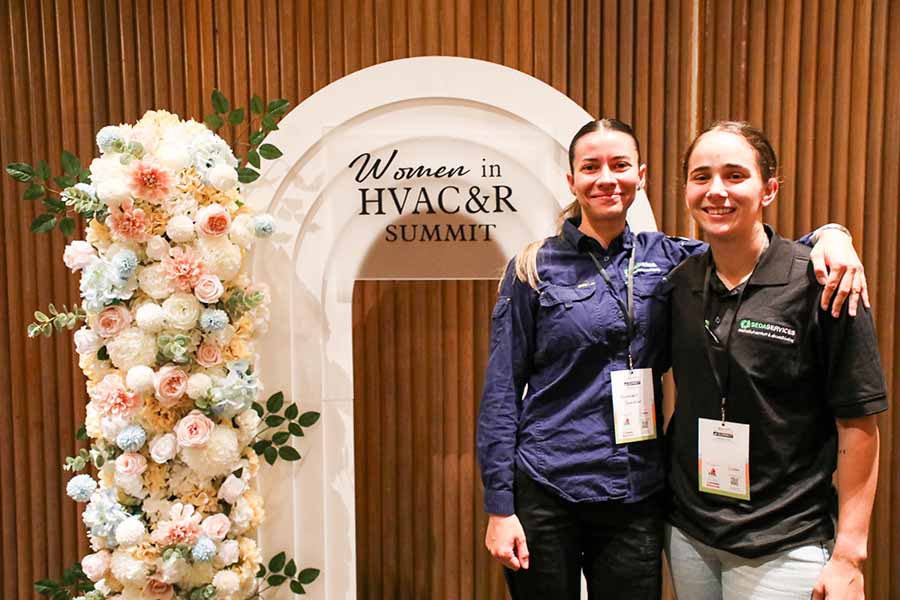
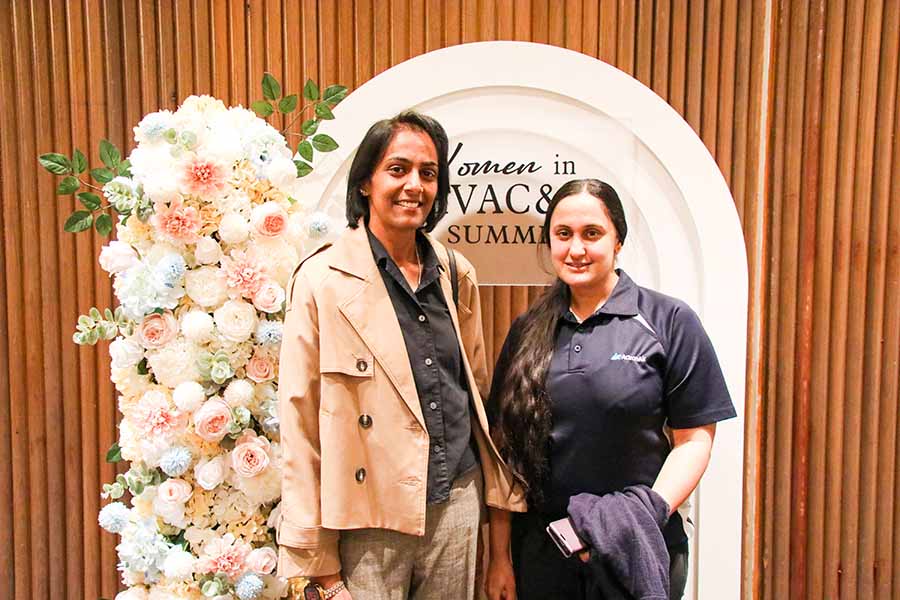
Photo gallery
More moments from the Women of AIRAH community
This article is part of the Global HVACR Women Week featured organisations series, sharing the stories of groups supporting women across heating, ventilation, air conditioning and refrigeration. If your organisation would like to share its story, we would love to hear from you.
Local voices. Global connections. One HVACR community.