How ABRAVA’s Women’s Committee Is Helping Transform Brazil’s HVACR Sector
Across Brazil, women are building careers in heating, ventilation, air conditioning and refrigeration as engineers, technicians, designers, researchers, educators, entrepreneurs and business leaders.
Yet, as in many countries, they remain underrepresented in the sector, particularly in technical and operational roles and in decision-making positions.
It was in this context that ABRAVA’s Women’s Committee emerged, creating opportunities for connection, development, research and visibility for women working across Brazil’s HVACR sector.
What began as a way to bring women together has grown into a programme of research, career development and leadership initiatives, with connections across Brazil and beyond.
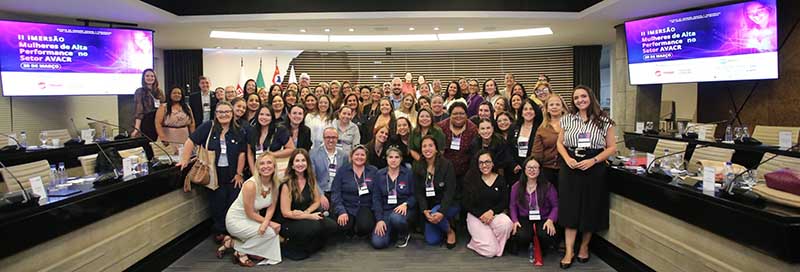
Image published by ABRAVA.
Creating a network at a challenging time
ABRAVA’s Women’s Committee grew out of the need to strengthen connection, mutual support, professional development and women’s leadership in a sector historically characterised by male predominance.
Its activities began at a particularly challenging time for the world, marked by the COVID-19 pandemic, which inevitably restricted its initial programme.
The Committee was formally established in March 2020. Close to International Women’s Day, a gathering held on 7 March 2020 at Fatec Itaquera in São Paulo marked its official launch.
The event brought women together to discuss professional development and work in HVACR. Participants addressed subjects including good practice in HVACR, refrigeration and air conditioning, personal development and emotional intelligence.
At that stage, professionals were invited to lead different areas of activity. Priscila Baioco was invited to become President, Joana Canozzi to become Vice-President, Juliana Reinhardt of Trane joined the marketing subcommittee, Paula Souza of Danfoss took responsibility for the entrepreneurship subcommittee, and Professor Anna Cristina of Fatec became involved in training.
After the launch, the Committee began creating opportunities for women from different parts of HVACR to meet, learn from one another and discuss experiences that did not always find a place in traditional industry forums. These opportunities included online meetings and webinars as well as in-person events.
The Committee’s second leadership term began in March 2024, with Juliana Reinhardt as President and Ana Carolina Rodrigues as Vice-President. Its work is organised around four areas: Connection, Regionalisation, Transformation and Communication.
The Connection pillar aims to attract more women to the Committee’s activities, develop relationships with organisations sharing its purpose, increase participation in events that strengthen its visibility beyond the association, and continue research to track the evolution of women’s participation in the sector.
The Regionalisation pillar seeks to expand the Committee’s presence across Brazil, strengthening connections and creating opportunities for women in different locations to participate in the network.
The Transformation pillar concentrates on professional development and closer relationships with educational institutions, helping to educate and prepare women entering the sector.
The Communication pillar works to increase the visibility of women and the Committee itself, strengthen its institutional position, and share information, stories and initiatives that contribute to greater female representation in HVACR.
Together, these four areas connect the Committee’s day-to-day activities with its wider ambitions for women in the sector.
Working nationally, ABRAVA’s Women’s Committee connects women from different regions and professional backgrounds. Its community includes professionals in industry, manufacturing, installation and maintenance, design, engineering, sales, management, education and entrepreneurship.
The network welcomes women across the industry, bringing different roles, skills and career experiences into the same conversation.
National gatherings, training and professional development activities have helped the network grow, alongside relationships with industry organisations.
Building a national meeting place
The National Meeting of Women in the HVACR Sector has become a regular opportunity for women to meet, develop professionally and exchange experiences.
By its seventh edition in 2026, the gathering had built a continuing conversation about women’s opportunities and challenges in the cooling industry.
The third edition, held on 5 March 2022, focused on entrepreneurship, innovation, skills and professional challenges, reinforcing the National Meeting’s role as a place for inspiration and development.
On 14 September 2023, the fourth National Meeting marked a new stage. Held at São Paulo Expo alongside FEBRAVA and CONBRAVA, it brought together more than 150 participants and placed entrepreneurship, women’s leadership and women’s contributions to the cooling industry at the centre of discussion.
On 9 March 2024, the fifth National Meeting at Fatec Itaquera in São Paulo brought together more than 100 industry professionals. Its programme addressed motherhood, careers, professional challenges, women’s leadership and career development. Alongside discussion of obstacles, it created space for sharing experiences, networking and building support networks. It also marked the transition of the presidency from Priscila Baioco to Juliana Reinhardt and the beginning of a new stage for the Committee.
The discussions also explored how to help women remain in the sector and progress into leadership, with motherhood emerging as an important part of that conversation.
On 11 September 2025, the sixth National Meeting returned to São Paulo Expo during FEBRAVA. With a focus on connection, learning, inspiration and the development of women’s participation in HVACR, it brought together around 200 people.
The seventh National Meeting took place in Rio de Janeiro on 8 October 2026, bringing together around 120 participants. Taking the gathering to Rio for the first time marked a practical step in the Committee’s regional expansion.
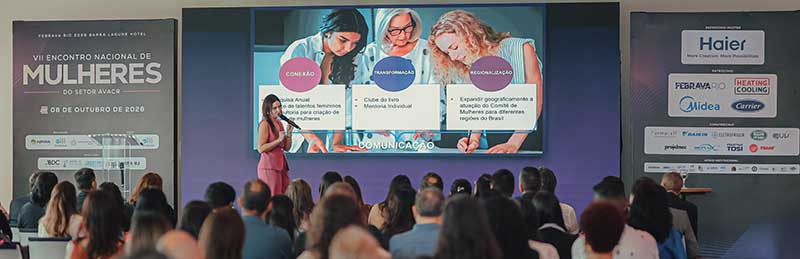
Image published by ABRAVA.
Between national gatherings, the Committee keeps women connected through open meetings, webinars about women in engineering and gender equity, campaigns and institutional activities. Its Café com Conteúdo began in 2021, bringing women together for discussion, learning and networking, and continued in subsequent years.
As a year-end networking event, the Committee also holds an Integration Reception at ABRAVA’s headquarters in December, with an audience of around 70 people. At this event, the President shares planning tools to help participants prepare for an even more successful year.
These activities help relationships continue beyond an individual event, giving women more opportunities to exchange experiences and support one another throughout the year.
Understanding and measuring women’s experiences
Alongside its events, the Committee has been listening to women through surveys of their participation, experiences and expectations in Brazil’s HVACR sector.
It presented the results of its second survey at the sixth National Meeting in 2025, returning to questions first explored in 2020.
Conducted online in June and July 2025, the survey received 26% more responses than the first edition. It asked women working in the segments represented by ABRAVA about their careers, workplaces, challenges and expectations for the future.
The results reflect the experiences of the women who responded and their reports about their workplaces.
Their answers showed progress in some areas and continuing difficulties in others.
Fewer respondents identified pay inequality as a problem: 27.6% in 2025, compared with 39.4% in 2020. Reported difficulty accessing courses because of their cost also fell by 15.3 percentage points, suggesting that some financial barriers to professional development had eased.
Women’s participation in leadership also showed signs of progress. In the 2025 survey, respondents reported gender balance in leadership positions in 27.1% of their companies, an increase of 7.5 percentage points compared with the earlier survey. At the same time, the findings show that change remains incomplete: respondents reported more men than women in leadership in 66.7% of companies, while only 6.2% had more women than men in these positions.
Respondents also reported changes in the wider workforce. In 2025, 35% described an equal balance of men and women in their companies, an improvement on the earlier survey. However, 62.7% described workplaces that remained predominately male.
Not every barrier had diminished.
Reported difficulty combining motherhood and a career increased by 6.7 percentage points between the surveys. The perceived need for support with career planning also rose by 3.6 percentage points, while the need for resources to expand businesses increased by 5 percentage points. Gender discrimination and the undervaluing of women’s capabilities remained broadly unchanged, affecting around 30% of respondents.
Access to some opportunities appears to have improved, while work–life balance, career development and progression into leadership continue to need attention.
Women’s routes into HVACR were varied too. For 65% of respondents, the sector had not been their original career choice.
The first survey helped the Committee plan its activities. Returning to those questions five years later allows it to see where experiences have changed and where further support is needed.
Listening to women in this way helps the Committee decide where to focus its next steps.
Developing high performing women and better workplaces
In 2024, more than 90 professionals came together for “Gender Equity in Focus — Immersion for Change”, exploring diversity, inclusion, leadership, professional development and cultural change. The intensive event was designed to give participants time to engage with these subjects and leave with a fresh perspective. Further editions followed in 2025 and 2026.
In 2025, the immersion took the theme “High-Performing Women” and moved to the FIESP auditorium on Avenida Paulista in the heart of São Paulo. The format returned in 2026.
The programme extends beyond technical knowledge to consider the wider conditions women need to build sustainable and successful careers.
Topics included leadership, health, resilience, motherhood, personal image, career development, work–life balance and the often invisible mental load carried by women. Diversity was also discussed as a contributor to organisational performance and business growth.
The second edition took place at FIESP in March 2025. The third, held in March 2026, brought together more than 150 professionals and more than 20 speakers and panellists. Discussions included diversity and performance, inspiring women’s voices, competence and leadership.
Attracting more women into HVACR also means creating workplaces where they can remain, progress, have their competence recognised and balance professional responsibilities with the realities of their lives.
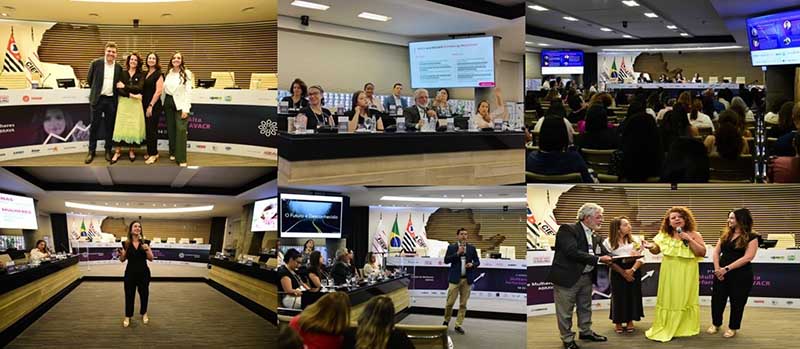
Image published by ABRAVA
Participants have described the immersion events as opportunities to learn, build connections and share experiences.
Heloísa Nanzer, of Trane Brasil, highlighted the growing representation of women in HVACR and the importance of women recognising their own contribution to the sector.
For Natalia Lobo, Diversity Co-chair of ASHRAE Brasil Chapter, taking part in one of the Committee’s initiatives helped strengthen her sense of belonging. Connecting with other women in influential industry roles made her more aware of the voices, relationships and opportunities within the professional community.
These experiences reflect an important part of the Committee’s purpose: helping women build relationships that support their professional lives.
The events also encourage reflection on the workplaces in which women build their careers, alongside supporting their individual development.
Men have taken part too. At the second edition, ABRAVA highlighted their importance as allies in creating more diverse workplaces, drawing on UN Women’s HeForShe movement. Male leaders and specialists continued to contribute to the 2026 programme.
“It is inspiring to see so many talented professionals developing their skills, exchanging experiences and taking on leadership positions.” — Raimundo Ribeiro.
Roberto Montemor Augusto Silva, Vice-President of ABRAVA’s Board, also highlighted the changing presence of women in the sector and the opportunities these gatherings offer to learn from one another and develop as leaders.
The ambition is to help women develop their capabilities, expand their networks and take on leadership roles, while encouraging workplaces to recognise and benefit from their contributions.
Involving the whole sector
Although the Committee exists to strengthen women’s participation, building a more inclusive sector is a shared responsibility. Employers, association leaders and male colleagues also have a role in removing barriers and creating fairer opportunities.
The Committee’s events have involved women and men and presented gender equity as a matter of fairness as well as an issue affecting the availability of talent, innovation, decision-making and organisational performance.
This is an important message for a sector facing a shortage of skilled professionals and needing to attract younger people. Any industry that appears to offer opportunities to only part of the population unnecessarily limits its own talent pool.
From the outset, the Committee sought to involve men. In 2020, one of its first initiatives marked Women’s Equality Day and drew inspiration from UN Women’s HeForShe movement. The Committee invited men in the sector to speak publicly about the importance of women’s participation in HVACR, encouraging them to become active participants in change.
This approach continues in more recent initiatives. At the third immersion event in 2026, the panel “Diversity and Performance — How Inclusion Drives Business Growth” involved four male guests, including business leaders and management professionals. Guided by the HeForShe principle, it addressed leaders’ responsibilities for creating more equitable workplaces and supporting women’s career development.
The Committee seeks to involve men in discussions about organisational culture, leadership and management, where support for women needs to translate into decisions and action.
The Committee has also built relationships with educational institutions, business organisations and other industry bodies. Early connections included Sebrae, SENAI and FATEC, taking the conversation beyond ABRAVA itself.
A gathering marking Women’s Equality Day, for example, brought together member companies and organisations including ABRALIMP, Centro Paula Souza, FATEC and Reed Exhibitions to discuss equity, women’s leadership, ESG and professional challenges.
For the Committee, however, allies’ participation is only the first step. The next challenge is to turn support for equity into practical organisational change.
In the first survey, for example, only around 30% of respondents perceived a balance between men and women in their companies’ overall workforce, while fewer than 17% of women working in private companies held leadership positions.
The 2025 survey suggests progress, while showing that many respondents still work in predominately male organisations.
The Committee wants to bring examples of businesses treating diversity as a strategic priority into the wider HVACR conversation. It also wants commitments to be measurable, through changes in women’s participation in teams, management and leadership.
The ambition is to contribute to a better sector for everyone: one that recognises talent regardless of gender, develops more diverse leadership and makes inclusion part of business strategy.
From Brazilian leadership to international exchange
The Committee’s influence is also beginning to extend beyond Brazil. Juliana Reinhardt represented ABRAVA at ExpoAcaire 2024 in Bogotá, Colombia, helping connect its work with the wider Latin American HVACR community. Participation in the 2026 edition was also included in the Committee’s international plans.
Juliana participated as a panellist and mentor at the Society of Women Engineers’ WE Local conferences in Joinville, Santa Catarina, in 2024 and Campinas, São Paulo, in 2025, where she spoke to engineering students about women’s important role in HVACR.
ABRAVA describes the Committee as a successful model that has attracted interest through FAIAR, the Ibero-American Federation of Air Conditioning and Refrigeration Associations, and encouraged similar initiatives among other member associations.
This exchange is particularly relevant to Global HVACR Women Week.
Women’s groups can share approaches, research questions and practical lessons while adapting them to each country’s circumstances. They can learn from one another without needing to develop identically.
Extending the reach across Brazil
Reaching women across more of Brazil is an important part of the Committee’s plans.
Brazil’s size means a programme historically concentrated mainly on national events in São Paulo may not be equally accessible to women in every state. The 2026 gathering in Rio de Janeiro demonstrates an initial step towards a wider presence. Regional activities, local representatives, online connections and partnerships with educational institutions could enable many more women to participate.
Women work throughout the industry, in manufacturing, distribution, retail, installation, maintenance, design, engineering, sales, administration and management, and at different stages of their careers. A wider regional network could help more of them take part.
Regionalisation therefore involves more than holding events in other cities. It means building a network connecting established professionals, women entering the workforce and those still in education. The proposed approach includes local ambassador groups, quarterly in-person meetings and a defined programme supporting professional development and networking.
Students, apprentices and young professionals are particularly important to this work. Closer relationships with educational and vocational training institutions can introduce HVACR as a possible career to women who have not yet encountered the sector, while enabling experienced professionals to share knowledge, examples and experience with younger people.
Digital connections also play an important role, reducing geographical barriers and allowing a professional far from the industry’s main centres to access discussions, information and connections.
A woman working in a small company, studying outside a major city or living in a region with fewer HVACR businesses should also be able to recognise the Committee as a place where she belongs.
A wider network would also help the Committee listen to different local needs. A technician, student or entrepreneur in a smaller city may face different challenges from a professional in a large São Paulo company. Those experiences can help shape its priorities.
Building a sustainable regional network will require local volunteers, digital connections and partner institutions, helping the community develop a continuing presence across Brazil.
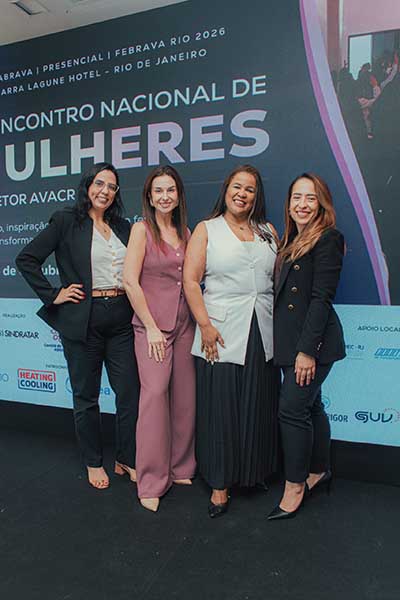
Image published by ABRAVA.
Turning connection into change
ABRAVA’s Women’s Committee has demonstrated that a professional network can be much more than a place to exchange contacts. Through national gatherings, research, leadership development and international collaboration, it is building foundations for long-term cultural change.
Its next challenge is to turn growing visibility into measurable influence: more women entering HVACR, more remaining in the sector, more recognised for their technical knowledge, and more participating in the decisions that shape the industry’s future.
From meeting to transformation
Reflection by Juliana Reinhardt, President of ABRAVA’s Women’s Committee
“When we look back at the road we have paved since March 2020, it is clear that ABRAVA’s Women’s Committee has grown from a support group into a real movement for cultural and strategic transformation in Brazil’s HVACR sector. We were born amid the challenge of a global pandemic and, rather than retreating, created digital and in-person bridges that now sustain a dynamic national network of professionals.
“Our work is based not only on aspirations but on concrete evidence. The comparative results of our 2020 and 2025 surveys show that we are on the right path: we celebrate the reduction in perceived pay inequality and the 7.5 percentage point increase in gender balance in leadership positions. However, the same findings reveal that the landscape remains predominately male and that complex barriers, such as balancing motherhood with career progression, have become even more evident.
“This future, however, will not be built by women’s hands alone. Our invitation extends to the entire industry. To corporate leaders and our male allies, inspired by the HeForShe movement: diversity is not merely an ESG target; it drives innovation, competitiveness and business sustainability in a sector that needs to recruit and retain skilled talent. We need measurable commitments and organisational cultures that promote women’s real and secure growth.
“To HVACR professionals and students in Brazil and around the world, I leave this message: take your rightful place. Develop your skills, make yourselves heard and build networks. None of us needs to walk alone. Together, we are not simply occupying rooms; we are helping to design and lead the future of global climate control and refrigeration.”

Find out more
Visit ABRAVA’s Women’s Committee news page for its activities and updates:
https://abrava.com.br/category/noticias/noticias-do-comite-de-mulheres/
This article forms part of Global HVACR Women Week’s featured organisation series, sharing the experiences of networks and organisations supporting women across heating, ventilation, air conditioning and refrigeration.
The inaugural Global HVACR Women Week took place on 25–31 October 2026. The connections, shared learning and opportunities to contribute continue beyond the week itself.
Local voices. Global connections. One HVACR community.
https://www.globalhvacrwomenweek.com/