The UK Institute of Refrigeration’s Women in RACHP network turned ten in 2026. Practical training, shared experience and a welcome for people across the workforce have helped women find their place in the industry—and take a more active part in shaping it.
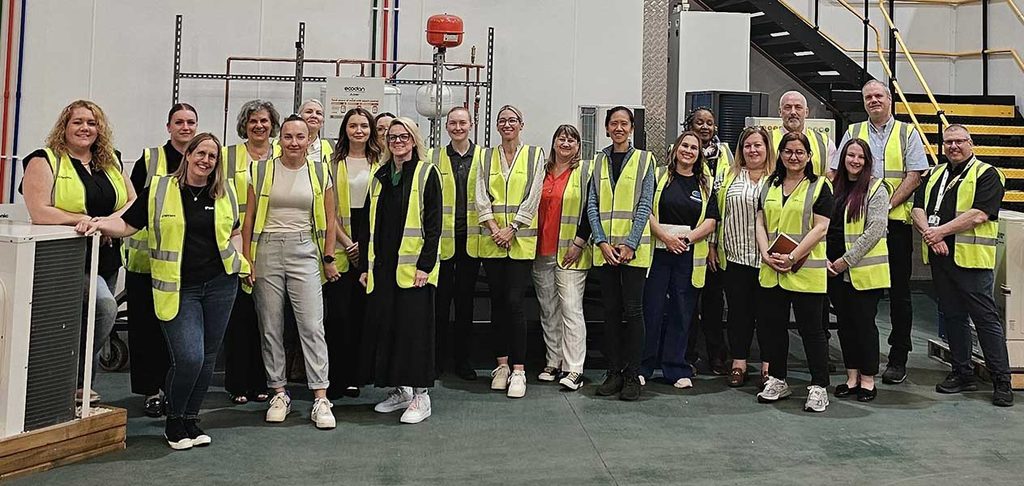
Established in June 2016, IOR Women in RACHP—widely known as WiRACHP—brings together people working across refrigeration, air conditioning and heat pumps. Over its first decade, practical training, career development, research, events, podcasts and international collaboration have helped women become more visible, confident and connected. Its work also gives employers a clearer understanding of the changes still needed across the sector.
WiRACHP welcomes men as allies, is open to IOR members and non-members, and recognises women working in technical, commercial and supporting roles, from service, design and research to sales, administration, marketing and training. That breadth has been central to its development: women contribute throughout the RACHP workforce, and lasting progress requires support from the wider industry.
Co-chair Astrid Prado explains why this matters to the wider industry:
“The work of Women in RACHP does not only benefit women, it strengthens the industry as a whole. By raising awareness of the contribution women already make, engaging with schools, the media and the wider public, and helping businesses attract, retain and develop diverse talent, the network supports a more visible, inclusive, innovative and sustainable sector.” - Astrid Prado, co-chair, IOR Women in RACHP
Recognising a need
Women in RACHP was established with support from ACR Journal to coincide with National Women in Engineering Day on 23 June 2016. The initiative began after Stephen Gill and Will Hawkins, then editor of ACR Journal, recognised the need for a network that could bring together women working in what remained a heavily pre-dominantly male industry.
Stephen recalls how quickly their conversation became something tangible:
“It was a perfect meeting of minds. Will, as Editor of the ACR Journal, had already been championing women in the sector through the magazine’s Women in ACR series. At the same time, as President of the IOR, I saw a clear need to give women in RACHP greater voice and visibility—to show that women were already making an important contribution and that the sector could offer them rewarding and fulfilling careers.
When I suggested to Will that we should create a group, he immediately saw its potential. In fact, before I had even arrived home from our meeting, he had created the LinkedIn group, chosen the name and designed a logo. That enthusiasm captured exactly what WiRACHP was about: recognising a need, creating a space and getting on with making it happen.” - Stephen Gill
Stephen, who was IOR President at the time, approached IOR Chief Executive Miriam Rodway with the idea. Following support from the Board, they invited Samantha Buckell to become involved. Samantha had only recently entered the RACHP sector but brought experience of participating in a women’s network in her previous industry.
Samantha initially agreed to join the committee but was much less certain about chairing it. She remembers feeling out of her comfort zone and wondering whether people would be interested in hearing from someone in an administration role. Stephen and Miriam recognised her ability to bring people together and encouraged her to accept, with the support of Kevin Glass, then her managing director at BITZER UK.
Miriam recalls how Jane Gartshore’s offer to host an early practical event helped turn discussion into action. The emerging network would give women opportunities to meet and learn together.
“Having the idea was one thing, but having people to drive it forward was really what made it kick off in the way it did.” - Miriam Rodway, Chief Executive, Institute of Refrigeration
A launch webinar delivered by Dr Catarina Marques examined women’s participation in science, engineering and refrigeration. It drew on international research concerning engineering and technical skills shortages, growing demand for refrigeration professionals and the opportunity to improve women’s representation.
The network gave women a way to find one another in an industry where they might otherwise have remained professionally isolated. A small planning group began shaping activities around practical learning, career development, outreach and greater visibility for female role models. Its aim was to help more girls and women see a future in cooling and support those already working in the sector. That work also supports the ambition of United Nations Sustainable Development Goal 5 on gender equality.
Finding the women working behind the scenes
Finding those women initially required deliberate personal outreach. Samantha would approach women individually at awards and other events, introduce the network and invite them to participate. Others heard about the initiative and came forward themselves.
Miriam describes the early participants as a self-selecting group: by creating the opportunity and the space, the network enabled women who wanted to contribute to find one another. Many remain active in the Institute and the wider profession today.
That inclusiveness was personal for Samantha. As a personal assistant, she was accustomed to enabling other people to attend meetings and industry events while rarely having the same opportunities herself. The network gave her a way to meet people across the sector and led her to ask how many other women were working behind the scenes without opportunities to become connected.
“This is your industry, come and meet people.” - Samantha Buckell, co-chair, IOR Women in RACHP
WiRACHP therefore sought from the beginning to reach not only women already visible at conferences and awards, but also those in administration, sales support, marketing, human resources and other essential roles that can be overlooked in conventional professional networks. As the network grew, it also welcomed apprentices, competition entrants, students and other newcomers who might otherwise have felt isolated at the start of their careers.
Building practical confidence
From its early years, Women in RACHP combined professional networking with practical and technical learning. Its first in-person career-development day, held at Cool Concerns in June 2017, gave participants hands-on experience with refrigeration equipment before a session on personal and career development.
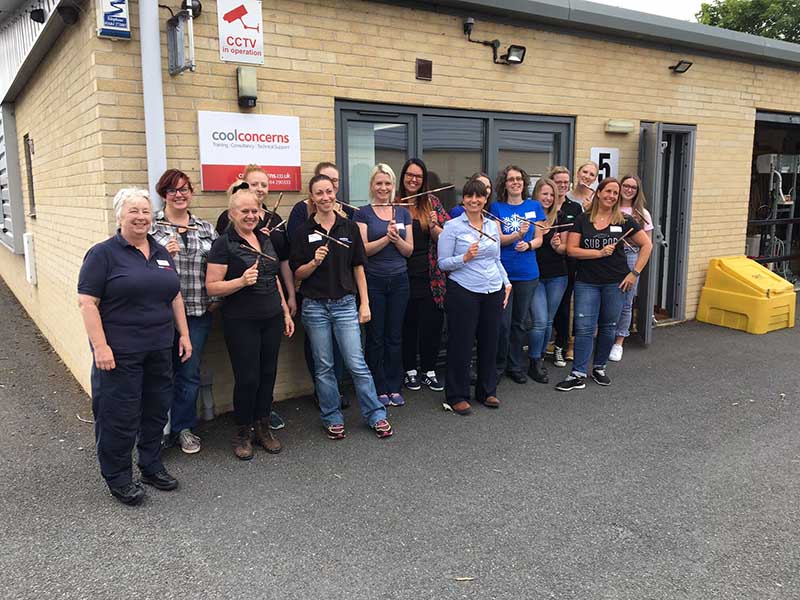
Lisa Waters, an Event Manager at the IOR, took part in that first Practical Engineering and Career Development Day. Her experience captures both sides of the programme:
“I took part in the first Practical Engineering and Career Development Day because I wanted to understand how refrigeration systems actually work and gain a better appreciation of what a career as an engineer in the RACHP sector involves.
The day gave me a much stronger understanding of the principles behind refrigeration, but it also encouraged me to step outside my comfort zone. I even had the opportunity to try brazing for the first time. I can't claim to have mastered it, but I was pleased to give it a go and experience a practical skill that I'd only ever seen from the sidelines.
What has stayed with me most, though, is not just the technical knowledge I gained, but the people I met. The day introduced me to an incredibly welcoming group who have since become a valued professional support network and, for many, good friends. That sense of community has been just as valuable as the practical experience itself.”
- Lisa Waters, Event Manager, Institute of Refrigeration
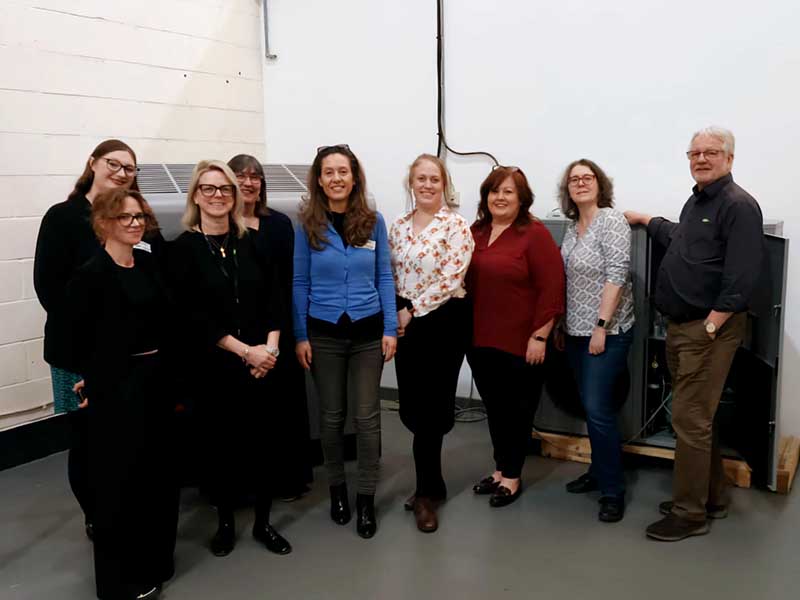
Miriam recalls around 25 to 30 people attending that first practical event, many of whom went on to become active within the network and the wider Institute. She remembers participants standing together holding the brazed joints on which they had been practising. Women were finding one another while gaining practical experience and confidence.
This combination became a recurring feature of the programme. Practical sessions allowed people working in sales, administration, marketing and other supporting roles to develop a deeper understanding of the technology around which their work revolved. Career sessions addressed confidence, motivation and difficult workplace situations.
Subsequent events have covered service and maintenance, refrigeration principles, electrical fundamentals, system design, energy reduction, international standards and the design of cold stores and refrigerated cabinets. Hosts have included BITZER UK, Fujitsu, Business Edge, Beijer Ref, Carter Thermal Industries, Daikin UK and Star Refrigeration.
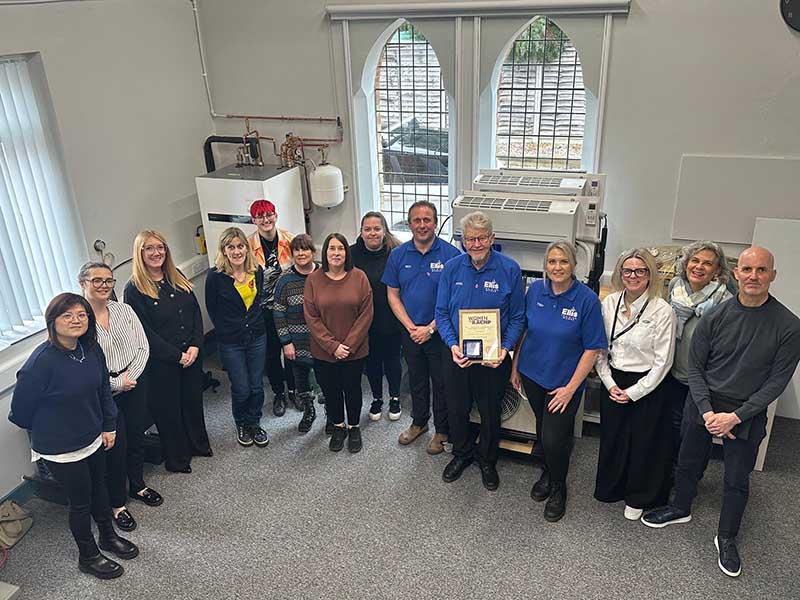
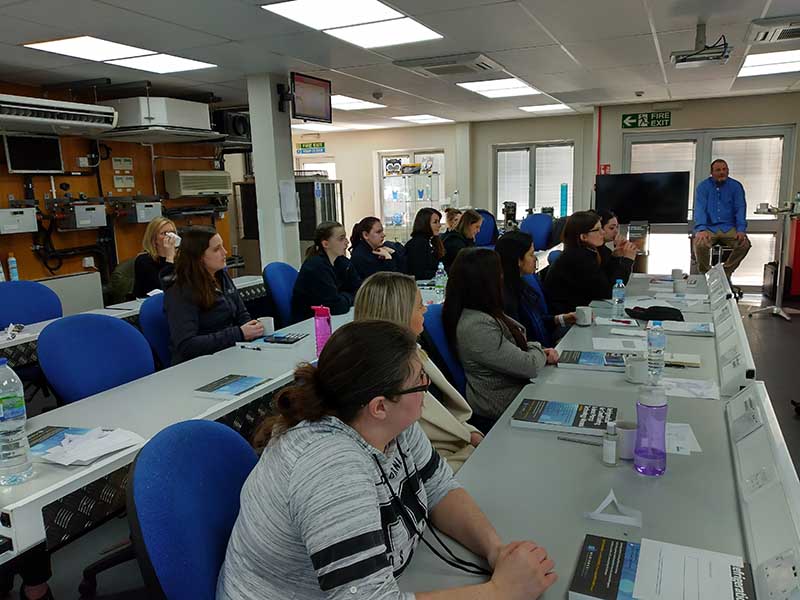
On 5 March 2026, a practical engineering day at Daikin UK’s Manchester Training Centre continued that approach. People from different RACHP roles explored refrigeration principles and electrical fundamentals alongside hands-on activities. No prior knowledge of refrigeration was required.
These events have also created opportunities to see significant low-carbon engineering projects in operation. During a visit to the Queens Quay district heating development in Clydebank, more than 40 participants saw a large-scale water-source heat-pump installation and learned how it supports lower-carbon heating for homes, businesses and public buildings.
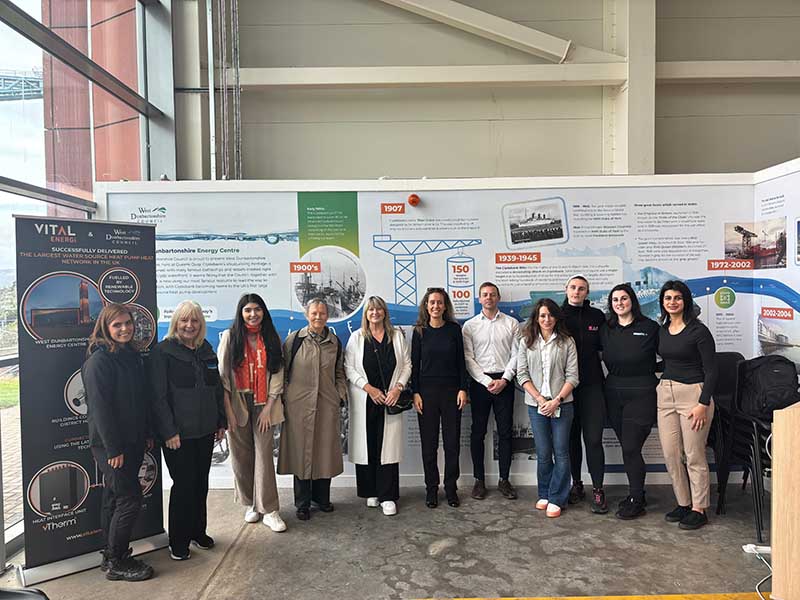
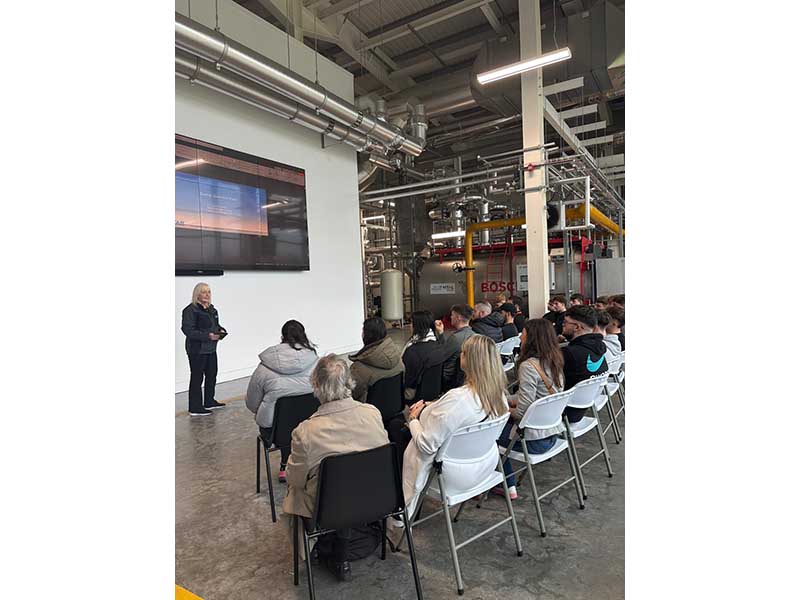
The value extends beyond technical education. Someone handling service calls, for example, may be better able to assess the work involved once she understands what an engineer is likely to encounter on site. Technical training can improve communication and decision-making even where the participant has no intention of changing roles.
At the same time, exposure to practical engineering has encouraged some women in office-based positions to consider field and technical careers. As Miriam observes, employers responding to skills shortages should not look only to schools or other trades. Sometimes future engineers are already working within the business and simply need the opportunity to see a different pathway.
From an event to a continuing community
A successful event can introduce people, but a sustainable network must keep them connected afterwards. WiRACHP’s meetings, regional gatherings and networking lunches provide face-to-face contact, while its newsletter and LinkedIn community allow members to exchange information and hear about new opportunities.
Some of its most valuable activity is also among its least formal. Relaxed monthly lunchtime meetings allow people to discuss workplace experiences, compare company practices or simply talk through a difficult situation with peers from across the industry.
As Samantha explains, attendance can be as small as three or six people, and no one is expected to join every meeting. Participants can talk through a problem, share a change in company policy or hear how others approach similar situations. For people who may not have women in comparable roles within their own companies, these industry peers provide perspective and reassurance.
“There’s somebody like me. There’s somebody I can phone.” - Samantha Buckell
For Samantha, this sense of care is part of the network’s purpose. Members may spend much of their time getting on with busy professional and personal lives, but when someone needs support, those relationships are there. Friendships have become as valuable as professional introductions.
The monthly Women in RACHP blog gives members a platform to discuss technical developments, careers, stereotypes, representation, work experience, artificial intelligence and international networking. Industry profiles make women’s careers more visible and challenge the idea that there is a single type of person—or one career path—suited to the sector.
One hundred for one hundred
One of WiRACHP’s most measurable early achievements was its “100 for 100” campaign in 2019. It aimed to increase the number of female IOR members to 100 by June 2019, marking the centenary of the Women’s Engineering Society. The IOR subsequently reported that the campaign had generated an increase of more than 100 per cent in its female membership.
The importance of those gains extended beyond the campaign’s membership total. Professional-body membership provides access to technical knowledge, professional registration, networking and opportunities to contribute to the direction of the sector. Encouraging more women to join the IOR therefore helped make them more visible within the professional community while opening routes into committees, governance, speaking, authorship and leadership.
The progression of Lisa-Jayne Cook provides one prominent example. She has described her journey from Women in RACHP committee member to IOR trustee and ultimately President of the Institute. Her experience demonstrates how participation in a specialist network can become part of a much wider professional and leadership journey.
Establishing an evidence base for change
Increasing participation was an important achievement, but membership figures could not explain women’s lived experiences once they entered or progressed through the industry. WiRACHP therefore began to examine the attitudes, barriers and workplace conditions affecting women across the sector.
Co-chair Astrid Prado led the development of Benchmarking the RACHP Industry’s Benefits and Attitudes Towards Women to Close the Gender Gap. Published in 2020, the study gathered evidence about workplace experiences and gave the sector a starting point for examining its practices.
The survey considered workplace culture, recruitment, career progression, mentoring, visibility and barriers affecting women’s participation. Its findings provided a benchmark and practical guidance for employers, giving businesses a basis for considering where their own practices could improve.
This work demonstrates an important aspect of WiRACHP’s purpose. The network not only supports individual women through training, visibility and connection; it also researches the conditions in which they work, identifies where change is needed and gives the wider industry practical information with which to respond.
Confidence that ripples outwards
An established network also made it easier to respond when new opportunities arose. Through a collaboration involving World Refrigeration Day and STEMazing, women from across the sector received training to deliver practical science and engineering activities to children.
The benefits extended well beyond school outreach. Participants reported that the training strengthened their own confidence in presenting to colleagues, senior stakeholders and boards. Their experience then encouraged other STEM ambassadors to become more active, creating a snowball—or ripple—effect beyond the original participants.
That pattern has also been evident in awards and professional recognition. Members encourage one another to put themselves forward and to recognise the value of work they might otherwise downplay. In turn, each visible achievement helps others see what may be possible.
Sharing the realities of working life
In June 2022, Women in RACHP launched its States of Matter podcast to coincide with International Women in Engineering Day. The podcast brings together women working in engineering and related roles to discuss their career journeys, the opportunities and challenges they have encountered, and issues affecting women’s working lives.
Its conversational format allows listeners to hear not only professional achievements but also the uncertainties, decisions and unexpected routes behind them. Alongside the blog and industry profiles, the podcast has created an expanding record of women’s experiences within RACHP.
The 2026 tenth-anniversary episode brought Samantha and Miriam together with host Lisa-Jayne Cook, who was IOR President at the time of recording. Their conversation revisited the network’s beginnings, the people who helped it develop and the opportunities they want to create next.
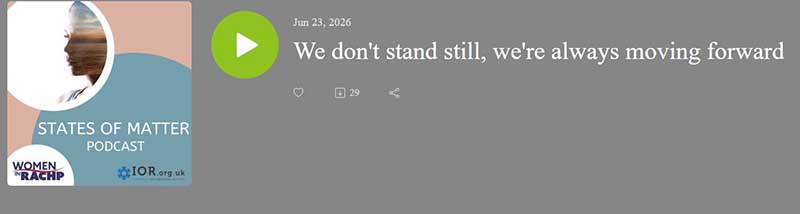
We don't stand still, we're always moving forward | The States of Matter Podcast
Creating pathways into leadership
The deeper impact of the network is not measured solely by attendance at its own activities. Members have become speakers, technical contributors, committee participants, mentors and visible representatives of the profession. Each helps widen perceptions of who can speak with authority about refrigeration, air conditioning and heat pumps.
Reflecting in the anniversary podcast, Miriam observed that it had become unusual to find an IOR committee with no women involved. More women were becoming known through the network, attending events and putting themselves forward to contribute.
Women are also taking leading roles within IOR branches and becoming more visible as managing directors, chief executives, speakers and award recipients. Lisa-Jayne points to recognition beyond RACHP, including the Women’s Engineering Society WES50, Rising Star, construction and other engineering awards. These achievements bring women’s expertise to the attention of a wider engineering community.
“We’re showcasing the female talent we have in our industry in the wider engineering and construction fields.” - Lisa-Jayne Cook, reflecting during the tenth-anniversary podcast
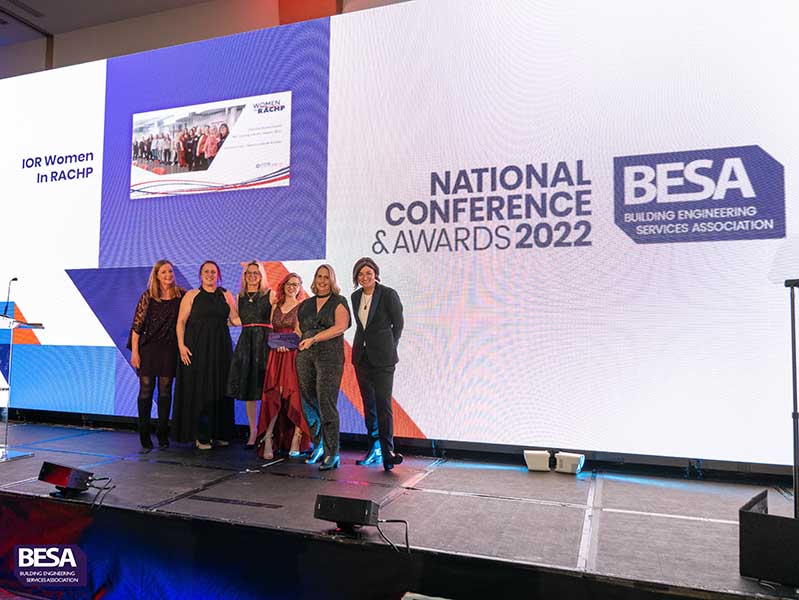
The network’s open approach is important to that progression. Someone may first become involved because she wants to meet other women or better understand the technology surrounding her role. That initial contact may lead to IOR membership, professional registration, conference participation, committee service or leadership.
Those exchanges work in both directions. In the anniversary conversation, Lisa-Jayne points out that people established in their careers can no longer assume they know what entering the industry feels like today. Bringing generations together gives experienced colleagues a chance to share what they know while learning about the different challenges and expectations of newer entrants.
Connecting the UK with a global movement
Although established through the UK Institute of Refrigeration, Women in RACHP is part of a wider international community. Its connections include the International Network of Women in Cooling (INWIC), the International Institute of Refrigeration’s work on careers in cooling, and the INWIC Mentorship Programme, which connects mentors and mentees across the global cooling sector.
These relationships allow experience gained in the UK to be shared internationally while exposing WiRACHP participants to ideas, careers and professional connections from other countries. Miriam remembers the moment when an international gathering referred to the IOR’s women’s network as an established example for others to follow—evidence that the initiative had become a model recognised beyond the UK.
Stephen sees those international connections as an extension of the network’s original purpose:
“The challenges women face in this industry don’t stop at the UK border, and neither should the support. Sitting on the INWIC board has shown me how much faster we move when networks like WiRACHP compare notes with their counterparts overseas, rather than each starting from scratch.” - Stephen Gill, INWIC Board member
International collaboration matters because recruiting, retaining and advancing women is not a concern confined to one country. Cooling is essential to health, food, buildings, transport, data and modern life, yet women remain significantly underrepresented across much of its workforce. Women’s groups can achieve more by learning from one another than by repeatedly addressing the same challenges in isolation.
The next decade
The tenth anniversary provides an opportunity to recognise considerable progress. What began with an identified need, a webinar and a practical event has helped increase women’s professional-body membership, widen access to development and make their contributions more visible.
However, visibility is not the final objective. The continuing task is to bring more women into RACHP, ensure they remain and enable them to progress into technical, commercial and leadership positions. It is also necessary to reach women beyond established professional networks.
The anniversary conversation provided a clear indication of the network’s ambitions for its second decade. Samantha wants to connect with the growing number of women she now sees across the industry but does not yet know, particularly younger people and those working in less visible supporting roles.
For Samantha, reaching colleagues in supporting roles also means recognising a practical barrier: they may have less control over their time and need their manager’s agreement to attend training or volunteer. Keeping those women involved means making the value of participation clear to employers as well as to potential participants.
Miriam would like to see greater participation from apprentices and women in academia, who may have strong university networks but fewer links with the wider refrigeration community.
Astrid wants to expand access to mentoring through WiRACHP’s collaboration with INWIC, connecting women with experienced professionals in the UK and internationally. She would also like the network to offer practical resources that help employers assess their practices, address barriers and make measurable progress in recruiting and retaining a more diverse workforce.
Growth may eventually create opportunities for specialist groups serving particular professional interests, alongside larger events bringing the whole community together. The network is also considering a simple three-year plan, with a small number of clear objectives rather than a rigid programme.
That flexibility matters because the work continues to be led by volunteers. Committee members can step back during demanding periods of their professional or personal lives and return when circumstances allow, while others move forward to maintain momentum. This supportive approach has helped the network benefit from people at different career stages and with different family and caring responsibilities.
“We’re not exclusive. Anyone can join our network. Anyone.” - Samantha Buckell
Connection as a catalyst
Women in RACHP’s first decade demonstrates what can happen when an industry makes a deliberate effort to help an underrepresented community find one another.
Its achievements have not resulted from a single event or campaign. They have grown through repeated opportunities to learn, connect, speak and participate: a practical training day, an introduction to a colleague, a lunchtime conversation, a podcast, professional membership, a mentor or an invitation to join a committee.
Each may appear modest in isolation. Together, they can change how a woman sees her place in the industry—and how the industry sees her.
As Women in RACHP enters its second decade, its challenge is no longer simply to demonstrate that women are present in refrigeration, air conditioning and heat pumps. It is to help ensure that their knowledge, experience and leadership become increasingly visible and influential throughout the profession.
Find out more
To learn more about Women in RACHP, its events, blog, podcast and mentoring connections, visit https://ior.org.uk/networking/women-in-rachp. You can also contact the IOR at ior@ior.org.uk.
This feature is part of Global HVACR Women Week’s series introducing the communities connecting women across HVACR and related sectors. Does your group have an experience, initiative or story to share? We welcome contributions from every region. Contact info@worldrefrigerationday.org.
Local voices. Global connections. One HVACR community.