A community strengthening skills, connecting experiences and opening opportunities for women in refrigeration and air conditioning.
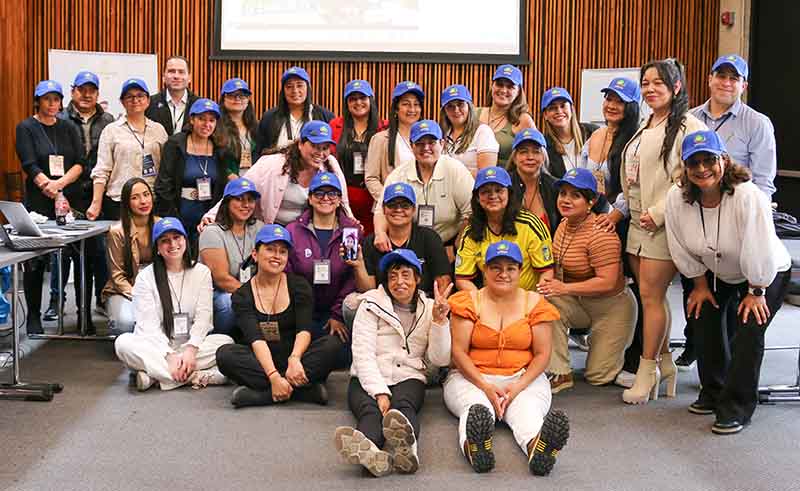
Credit: Unidad Técnica Ozono (UTO), Ministry of Environment and Sustainable Development / United Nations Development Programme (UNDP).
Connecting women across the RAC sector
Behind the refrigeration and air conditioning systems that support everyday life and many economic activities are women who install, maintain and repair equipment, work in manufacturing, teach, manage processes, undertake administrative work and participate in refrigerant recovery and other areas of the sector. Their knowledge and experience contribute to an industry that continues to evolve. Yet their professional participation can still encounter barriers relating to gender stereotypes, access to opportunities and equal recognition of their abilities.
Colombia’s Women’s Refrigeration and Air Conditioning Network—the Red de Mujeres del Sector RAC de Colombia—developed in this context. It connects women from different regions, backgrounds and professional experiences. Beyond bringing women together, the Network encourages the exchange of knowledge, connects participants with training and professional development opportunities, and strengthens their participation, leadership and visibility in an industry undergoing significant regulatory, technological and environmental change.
The initiative is led by the Unidad Técnica Ozono (UTO) within Colombia’s Ministry of Environment and Sustainable Development, with support from the United Nations Development Programme (UNDP) and collaboration with the Colombian Association of Air Conditioning and Refrigeration (ACAIRE). This partnership connects the country’s environmental commitments with skills development and women’s participation in the sector.
In Colombia, UTO coordinates national implementation of the Montreal Protocol and promotes action to progressively eliminate the consumption of ozone-depleting substances, alongside work towards other environmental commitments affecting the sector. Training, technological conversion and capacity building are part of this work.
The Network contributes by bringing opportunities closer to women and recognising that the sector’s transformation depends on more than technological advances. It also requires attention to the conditions in which women enter the industry, undertake training, develop their abilities and build their careers.
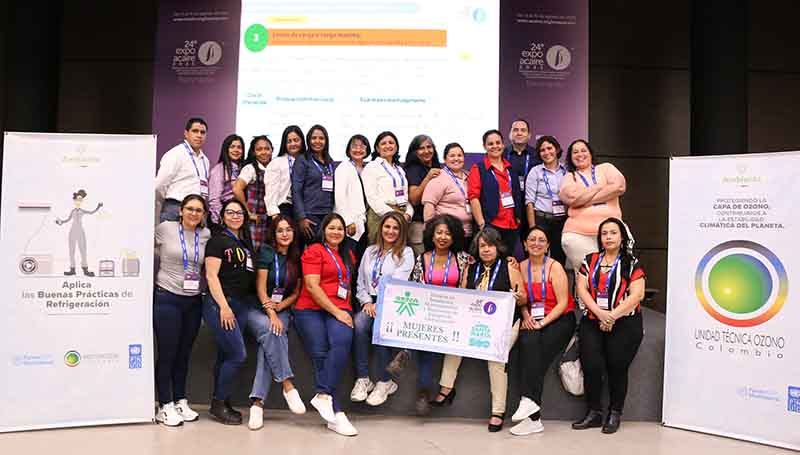
Credit: Unidad Técnica Ozono (UTO), Ministry of Environment and Sustainable Development / UNDP.
Strengthening skills to open new opportunities
Learning, updating knowledge and putting skills into practice are part of everyday work in refrigeration and air conditioning. For women, access to these opportunities also provides a way to strengthen their abilities, share their knowledge and expand their professional prospects.
The Network’s annual gatherings therefore provide opportunities for technical training and updates, networking and individual support. They are places to learn and to meet other women who share professional interests, challenges and aspirations.
One example was the Second Annual Gathering, held during Expoacaire 2025, which brought together 22 women from different regions of Colombia. Its programme combined professional exchange with technical training, including a UTO workshop on Colombian Technical Standard NTC 6228-1, addressing safety criteria and environmental considerations relating to refrigeration systems. Participants also undertook practical brazing exercises at Industrias Thermotar Ltda.
The gathering recognised achievements in occupational competence certification and teaching training through Colombia’s National Learning Service (SENA), supporting the development of future instructors and assessors. A session on preventing gender-based violence broadened the discussion to the conditions needed to support women’s participation and professional development in predominately male sectors such as refrigeration and air conditioning.
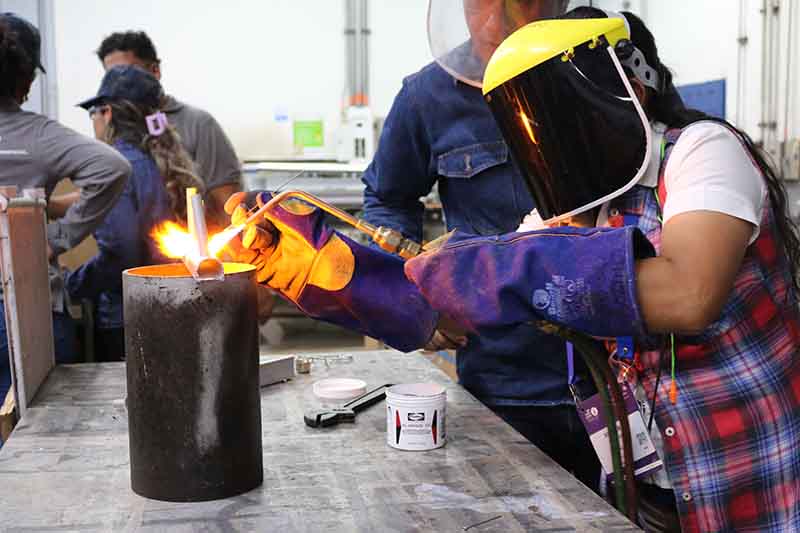
Credit: Unidad Técnica Ozono (UTO), Ministry of Environment and Sustainable Development / UNDP.
These experiences show that strengthening skills involves more than passing on technical knowledge. It also means creating spaces where women can recognise their abilities, share their experiences and build relationships that support their continued participation and professional growth.
Training also needs to connect with practical opportunities to carry out the work. With this in mind, the Third Annual Gathering, held on 30 September 2026 at Corferias in Bogotá, introduced a call for applications to a pilot initiative providing tools and equipment. Women already working in the RAC sector, or preparing to enter it, could apply subject to the programme’s conditions. The initiative aims to support their technical work through improved access to the tools they need.
The programme also included a UTO presentation on the RAC sector, its transformation and the issues requiring attention to prevent or reduce gender gaps. In the afternoon, participants attended technical training on leak management.
A total of 30 people participated, including UTO staff, women working in the RAC sector and representatives of partner institutions such as SENA and ACAIRE. The gathering combined training, discussion and opportunities to strengthen women’s participation in the industry.
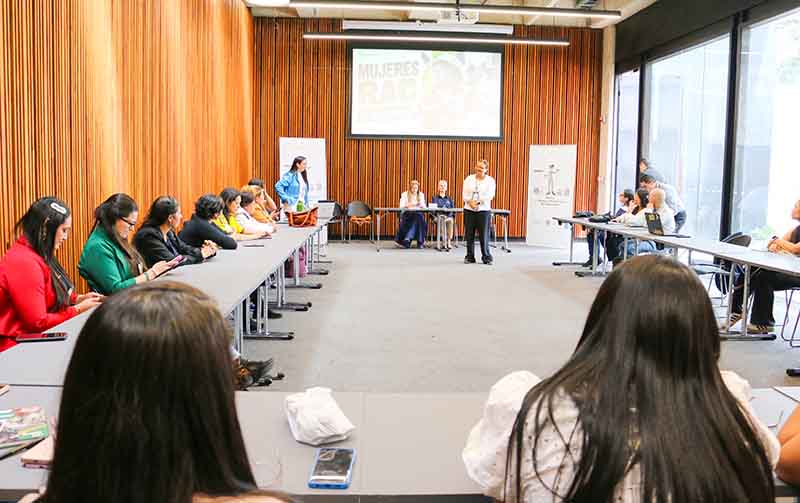
Credit: Unidad Técnica Ozono (UTO), Ministry of Environment and Sustainable Development / UNDP.
A community built through everyday connections
The Network extends beyond face-to-face gatherings and institutionally organised activities. Much of its life develops through everyday conversations, questions and experiences that participants have a space to share.
The Network’s WhatsApp group has become a meeting point for women living and working in different Colombian cities. Members ask technical questions, recommend one another, share photographs of their work and exchange professional experiences.
Within these everyday exchanges, a question about a technical task can become an opportunity to learn from another member’s experience. A photograph of completed work offers a way to demonstrate knowledge, share solutions and begin conversations between women who, despite working in different places, find common ground in their profession.
Learning therefore takes place through collaboration, questions and knowledge shared between peers as well as through formal training. The Network functions as a community of practice, where members can find support from other women who understand the challenges of their work.
Its value lies both in the institutional opportunities it connects women with and in the relationships participants build and maintain. Having a place to ask questions, share learning and hear other women’s experiences also helps strengthen confidence and a sense of belonging within the sector.
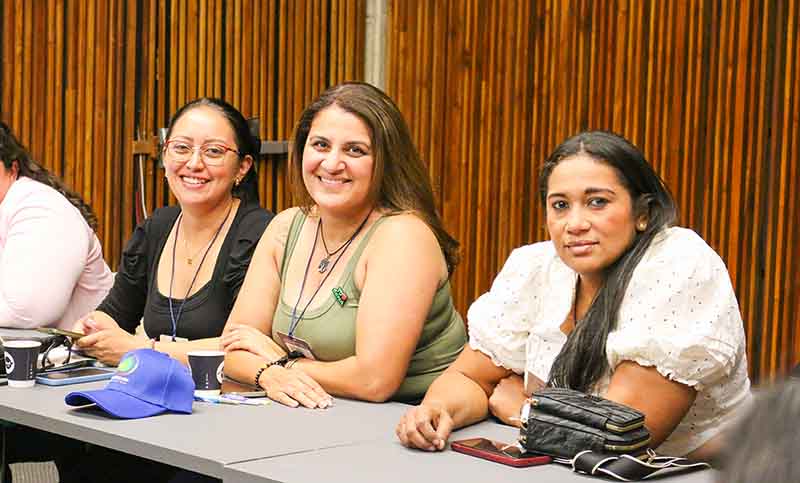
Credit: Unidad Técnica Ozono (UTO), Ministry of Environment and Sustainable Development / UNDP.
Recognising barriers and improving the conditions for participation
Opening opportunities for women in the RAC sector also means recognising the difficulties they may encounter throughout their careers. Stereotypes about who can undertake technical work, a lack of acceptance in some workplaces, unequal pay and limited opportunities can affect women’s development, even when they have the knowledge, experience and commitment required.
The experience of Glenys Mejía, a SENA-trained refrigeration, ventilation and air conditioning technician, brings these realities into focus through a voice from the sector itself.
In an interview published in UTO’s Boletín Ozono, Glenys shared her passion for her profession and the difficulties she had encountered, including gender stereotypes, lack of acceptance, unequal pay and limited opportunities. She also highlighted the importance of family support, continuous learning and teamwork.
“Gender should not be an obstacle to professional success.”
Glenys Mejía, refrigeration, ventilation and air conditioning technician
Testimony published in UTO’s Boletín Ozono. Translated from Spanish.
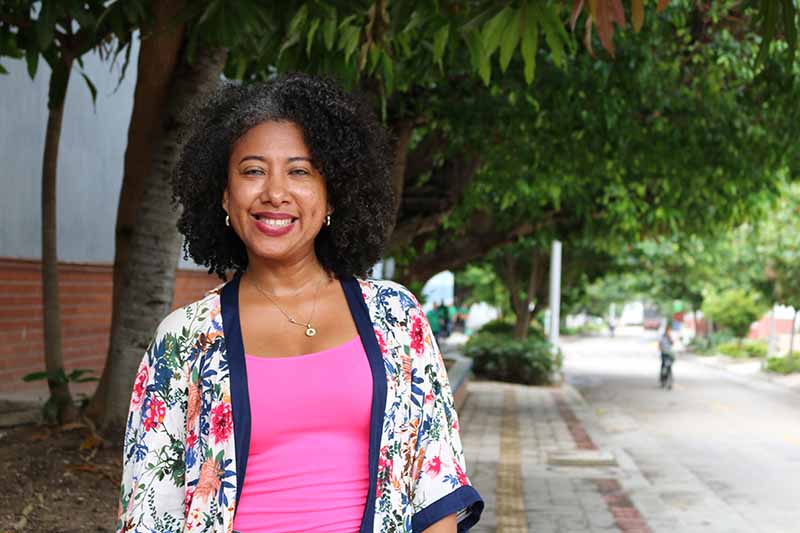
Credit: Unidad Técnica Ozono (UTO), Ministry of Environment and Sustainable Development / UNDP.
Her experience raises an important point: access to training is essential, but women also need workplaces that recognise their abilities, value their work and allow them to develop their potential on equal terms.
This perspective was explored further during the Third Annual Gathering in 2026, through a session facilitated by a representative of Bogotá’s District Secretariat for Women. Participants received information about self-care, time use and district services available to women and people with caring responsibilities.
The discussion addressed another dimension of professional life: how women divide their time between paid work, technical training and care responsibilities. Work supporting the Network has identified that many women combine these demands and frequently place their own wellbeing last.
Discussing self-care and the distribution of time also helps explain the conditions that influence women’s ability to study, work, take on new challenges and remain in the sector.
Expanding participation means recognising these responsibilities and connecting women with resources and support networks. Such support can help reduce the risk of women leaving training programmes or turning down employment opportunities because of difficulties balancing their commitments.
An initiative that continues to grow
The Women’s RAC Network forms part of a broader effort to incorporate a gender perspective into implementation of the Montreal Protocol, with support from the Multilateral Fund. In Colombia, this takes the form of action to strengthen technical skills, support networks, opportunities and leadership, recognising women’s contribution to the sector’s technological and environmental transformation.
The Third Annual Gathering on 30 September 2026 illustrates how this work connects different aspects of participation: understanding the sector and its gender gaps, wellbeing and caring responsibilities, access to tools for work, and technical development.
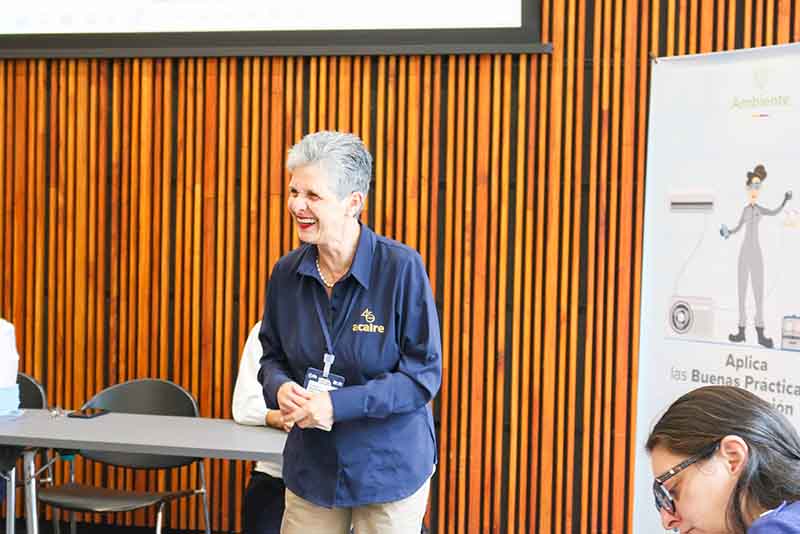
Credit: Unidad Técnica Ozono (UTO), Ministry of Environment and Sustainable Development / UNDP.
The Network’s reach extends beyond an individual gathering or institutional programme. Its continuity is also built through everyday conversations, shared questions, recommendations between colleagues and the experiences exchanged among its members.
This combination of training, mutual support and institutional collaboration allows the Network to develop around the needs, knowledge and experiences of the women who participate. Each gathering and each exchange helps sustain a space where their abilities can be recognised and their opportunities expanded.
Find out more
For information about the work of Colombia’s Unidad Técnica Ozono:
Nidia Mercedes Pabón
nmpabon@minambiente.gov.co
Visit the Ministry of Environment and Sustainable Development of Colombia.
This article forms part of Global HVACR Women Week’s featured organisation series, sharing the experiences of networks and organisations supporting women in heating, ventilation, air conditioning and refrigeration around the world.
Global HVACR Women Week takes place from 25–31 October 2026, creating opportunities to discover one another’s work, exchange experiences and build connections across borders.
Local voices. Global connections. One HVACR community.